

Reviews
5.0 Based on 50 traveler reviews
Alexey03/07/2026
Lake tour. Tajikistan. A great tour for those who want to see the most beautiful lakes of Tajikistan and completely switch off from city life for a few days.
Six days flew by. After crossing the Uzbek–Tajik border we had lunch in Penjikent, where we tried delicious gul-manti — rose-shaped dumplings made of very thin dough. Then we headed to Artuch, and in the evening walked to the Chukurak and Ziyorat lakes.
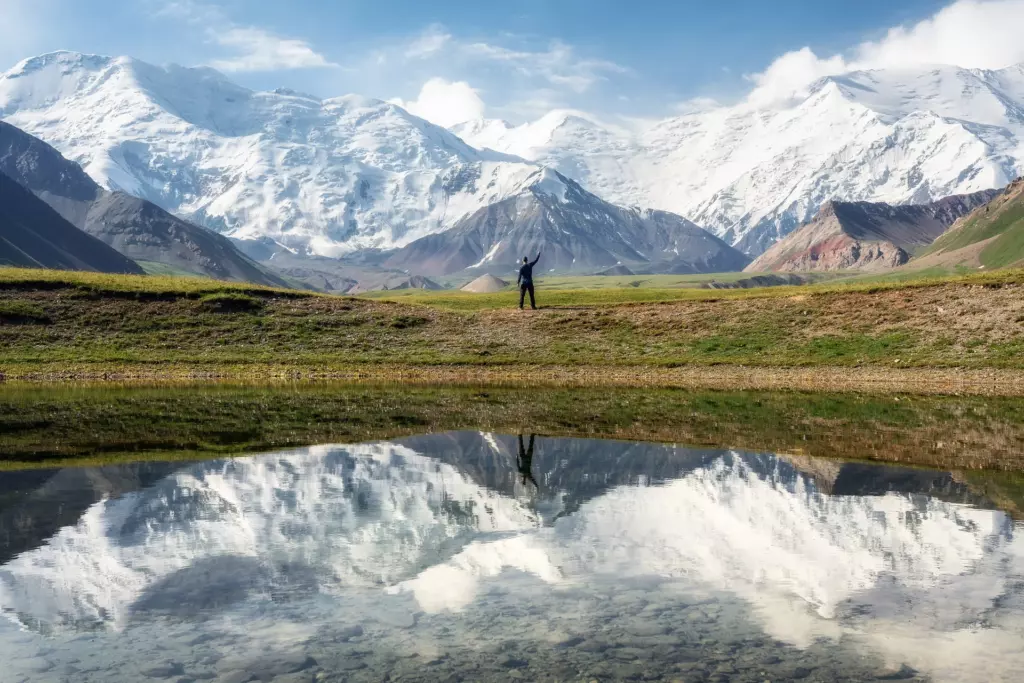
The second day was memorable for the trek to the Kulikalon lakes. On the way we swam in an icy mountain river, and in the evening enjoyed the silence, the mountains reflected in the water and the starry sky.
The hardest but most impressive part was the climb to the Alauddin pass. The panoramas from the pass and the turquoise Alauddin lakes are worth every effort. Special thanks to Ali for the delicious home-cooked food — after a long trek it was especially welcome.
We spent the next day resting: walked around, swam in the lake, and then drove via the Vertical mountaineering camp to the Marguzor lakes, admiring the stunning mountain scenery.
The Marguzor lakes also left vivid impressions. Because of the high water level, the paths around the upper lake were flooded, so part of the route had to be walked right through the water, which added a bit of adventure to the trip.
At the end of the route we visited Iskanderkul and the Fan Niagara waterfall. Then we drove to Dushanbe, where we had a little time to walk around the city before flying home.
I would especially like to mention the excellent organization of the tour. Everything was well thought out: the route, transfers, meals and overnight stays. Many thanks to our guide Evgeny for his attention to the group, help on the trail and a wonderful atmosphere throughout the trip.
This trip gave us incredible views, vivid emotions and a real sense of adventure. The photos turned out great, but they cannot convey all the beauty of the Fann Mountains. If you love mountains and active holidays, I definitely recommend this route. Afterwards you are left with only one wish — to come back again.
Six days flew by. After crossing the Uzbek–Tajik border we had lunch in Penjikent, where we tried delicious gul-manti — rose-shaped dumplings made of very thin dough. Then we headed to Artuch, and in the evening walked to the Chukurak and Ziyorat lakes.
The second day was memorable for the trek to the Kulikalon lakes. On the way we swam in an icy mountain river, and in the evening enjoyed the silence, the mountains reflected in the water and the starry sky.
The hardest but most impressive part was the climb to the Alauddin pass. The panoramas from the pass and the turquoise Alauddin lakes are worth every effort. Special thanks to Ali for the delicious home-cooked food — after a long trek it was especially welcome.
We spent the next day resting: walked around, swam in the lake, and then drove via the Vertical mountaineering camp to the Marguzor lakes, admiring the stunning mountain scenery.
The Marguzor lakes also left vivid impressions. Because of the high water level, the paths around the upper lake were flooded, so part of the route had to be walked right through the water, which added a bit of adventure to the trip.
At the end of the route we visited Iskanderkul and the Fan Niagara waterfall. Then we drove to Dushanbe, where we had a little time to walk around the city before flying home.
I would especially like to mention the excellent organization of the tour. Everything was well thought out: the route, transfers, meals and overnight stays. Many thanks to our guide Evgeny for his attention to the group, help on the trail and a wonderful atmosphere throughout the trip.
This trip gave us incredible views, vivid emotions and a real sense of adventure. The photos turned out great, but they cannot convey all the beauty of the Fann Mountains. If you love mountains and active holidays, I definitely recommend this route. Afterwards you are left with only one wish — to come back again.
Show moreHide
Oksana14/08/2025
All mountains are beautiful! Hello
When we want to take a break from the hustle and bustle of the city and recharge, we head to the mountains for a hike.
In our family, everyone knows who to call and text, who will take care of everything,……ZHENYA
Evgeny Shabanov has, one could say, made us fall in love with the mountains of Uzbekistan.
He showed us the most beautiful places: rivers, gorges, peaks and waterfalls.
All the hikes are interesting, with stories about the area and its possible inhabitants, what grows and when it blooms, and what natural phenomena shaped it.
Zhenya, thank you so much
See you on new hikes!
When we want to take a break from the hustle and bustle of the city and recharge, we head to the mountains for a hike.
In our family, everyone knows who to call and text, who will take care of everything,……ZHENYA
Evgeny Shabanov has, one could say, made us fall in love with the mountains of Uzbekistan.
He showed us the most beautiful places: rivers, gorges, peaks and waterfalls.
All the hikes are interesting, with stories about the area and its possible inhabitants, what grows and when it blooms, and what natural phenomena shaped it.
Zhenya, thank you so much
See you on new hikes!
Show moreHide
Alexander Shakhlo05/05/2026
First of all — we loved everything!
Tour of almost the entire country, two adults, 9 days, mid-April.
Initially, we were looking for package tours to cover as much ground as possible in a short period of time. We stumbled upon XtrailTour, represented by Evgeny Shabanov, while researching options around the Aral Sea. Evgeny quickly got involved and offered assistance in organizing the sightseeing itinerary and logistics not only for the Aral Sea but also for all the other cities and places we were interested in.
As a result, we had a wonderful individual tour of almost all the main attractions of Uzbekistan: Tashkent (+ the Institute of Solar Physics, Amirsoy, Charvak Reservoir) -> Samarkand -> yurt camp near Lake Aydarkul -> Gijduvan -> Bukhara -> Urgench -> Khiva -> Nukus -> Muynak -> yurt camp on the Aral Sea -> Nukus -> Tashkent
Once we'd agreed on everything on our «wish list», Evgeny put together an itinerary for the entire route with contacts for the guides and transfers.
Great guides, good transfers, everything is very flexible, Evgeny and everyone else are always in touch.
Considering the tight time frame for preparing the tour, the many moves between cities, and the sometimes major changes we made to the itinerary along the way — there were no problems anywhere (we booked the hotels and some of the domestic transfers ourselves).
Communication was mainly via Telegram with everyone.
Getting around the country — transfers arranged by Evgeny, the Afrosiyob high-speed train, domestic flights, Yandex Taxi.
Let me emphasize once again that, as an individual tour, everything was as flexible and convenient for us as possible (wait for us here, let us take more time for photos there, let's also visit this place, etc.).
I would like to separately highlight the guides in Bukhara (Albina) and on the Aral Sea (driver Kasym and guide Ajiniyaz).
We saw almost everything we wanted (the weather made some adjustments). Without any incidents.
Very positive overall impression of the tour and the country as a whole!
I highly recommend XtrailTour and Evgeny.
Tour of almost the entire country, two adults, 9 days, mid-April.
Initially, we were looking for package tours to cover as much ground as possible in a short period of time. We stumbled upon XtrailTour, represented by Evgeny Shabanov, while researching options around the Aral Sea. Evgeny quickly got involved and offered assistance in organizing the sightseeing itinerary and logistics not only for the Aral Sea but also for all the other cities and places we were interested in.
As a result, we had a wonderful individual tour of almost all the main attractions of Uzbekistan: Tashkent (+ the Institute of Solar Physics, Amirsoy, Charvak Reservoir) -> Samarkand -> yurt camp near Lake Aydarkul -> Gijduvan -> Bukhara -> Urgench -> Khiva -> Nukus -> Muynak -> yurt camp on the Aral Sea -> Nukus -> Tashkent
Once we'd agreed on everything on our «wish list», Evgeny put together an itinerary for the entire route with contacts for the guides and transfers.
Great guides, good transfers, everything is very flexible, Evgeny and everyone else are always in touch.
Considering the tight time frame for preparing the tour, the many moves between cities, and the sometimes major changes we made to the itinerary along the way — there were no problems anywhere (we booked the hotels and some of the domestic transfers ourselves).
Communication was mainly via Telegram with everyone.
Getting around the country — transfers arranged by Evgeny, the Afrosiyob high-speed train, domestic flights, Yandex Taxi.
Let me emphasize once again that, as an individual tour, everything was as flexible and convenient for us as possible (wait for us here, let us take more time for photos there, let's also visit this place, etc.).
I would like to separately highlight the guides in Bukhara (Albina) and on the Aral Sea (driver Kasym and guide Ajiniyaz).
We saw almost everything we wanted (the weather made some adjustments). Without any incidents.
Very positive overall impression of the tour and the country as a whole!
I highly recommend XtrailTour and Evgeny.
Show moreHide
Dmitry26/11/2025
Review of the Tashkent city tour and the Chimgan mountains trip with guide Evgeny We spent two days on tours with our guide Evgeny — and it was wonderful!
The first day — Tashkent.
The city made an incredible impression: modern, spacious, green and very atmospheric. The tour was perfectly balanced — Evgeny did not overload us with unnecessary information but managed to convey the essentials: the spirit of the city, its history, character and mood. We saw all the main sights, learned many interesting facts, had a delicious meal at the Plov Center and got useful tips on where else to go. Evgeny even suggested routes and ideas for our next days in Samarkand — special thanks for that!
The second day — the Chimgan mountains.
It had a completely different mood, and that was wonderful. The trip into nature gave us new emotions: mountains, fresh air, stunning scenery. We took the cable car up to the Amirsoy ski resort, enjoyed amazing views, and then went paragliding over the Charvak reservoir — an unforgettable feeling of freedom and beauty. On the way back, on Evgeny's recommendation, we stopped at a cozy café and tried incredibly delicious Uzbek dishes.
In short:
Huge thanks to Evgeny for his professionalism, attention, friendliness and two wonderful days in the city and in the mountains. The tours left only the warmest and brightest impressions. We definitely recommend him.
The first day — Tashkent.
The city made an incredible impression: modern, spacious, green and very atmospheric. The tour was perfectly balanced — Evgeny did not overload us with unnecessary information but managed to convey the essentials: the spirit of the city, its history, character and mood. We saw all the main sights, learned many interesting facts, had a delicious meal at the Plov Center and got useful tips on where else to go. Evgeny even suggested routes and ideas for our next days in Samarkand — special thanks for that!
The second day — the Chimgan mountains.
It had a completely different mood, and that was wonderful. The trip into nature gave us new emotions: mountains, fresh air, stunning scenery. We took the cable car up to the Amirsoy ski resort, enjoyed amazing views, and then went paragliding over the Charvak reservoir — an unforgettable feeling of freedom and beauty. On the way back, on Evgeny's recommendation, we stopped at a cozy café and tried incredibly delicious Uzbek dishes.
In short:
Huge thanks to Evgeny for his professionalism, attention, friendliness and two wonderful days in the city and in the mountains. The tours left only the warmest and brightest impressions. We definitely recommend him.
Show moreHide
Ninette Castellón02/09/2025
Wonderful experience I’m from El Salvador and was discovering Uzbekistan for a couple of weeks.
With Xtrail I could go to the mountains and have a wonderful two-days trip, where everything was well organized, safe and enjoyable.
Dmitry, the guide, is a good person, he even spoke in Spanish with me. He was explaining many history and local insights, which I value the most.
F., the driver, was also very nice; he was always caring about me, trying to communicate and make me feel comfortable.
I really appreciated their warm hospitality.
With Xtrail I could go to the mountains and have a wonderful two-days trip, where everything was well organized, safe and enjoyable.
Dmitry, the guide, is a good person, he even spoke in Spanish with me. He was explaining many history and local insights, which I value the most.
F., the driver, was also very nice; he was always caring about me, trying to communicate and make me feel comfortable.
I really appreciated their warm hospitality.
Show moreHide
Natalia Reshetova20/05/2026
I went hiking with Evgeny in the mountains of Uzbekistan — it was beautiful and great fun. Evgeny is an attentive and responsible guide: he always gives advice, takes your wishes into account and explains the route. I will definitely go again :)
Show moreHide