Skip to content

Uzbekistan + Turkmenistan

13-Day Tour of Uzbekistan and Turkmenistan: Tashkent, the mountains, Samarkand, Bukhara, Ashgabat, Merv, Darvaza, and Khiva

Two Silk Road countries in one trip: the Western Tien Shan mountains, Samarkand, Bukhara, and a night in a yurt near Aydarkul; then ancient Merv, white-marble Ashgabat, the fiery Darvaza crater, Kunya-Urgench, and Khiva.

Duration
13 days / 12 nights
Season
Spring / Autumn
Group
from 2 people
Price
Upon request
Book now

Tour program from Tashkent

The route can also be done in reverse — see the program on the next tab.

13 days · tap a day to expand
  1. Day 1 Tashkent—the capital of the old and the new

    The trip begins in Tashkent—the largest city in Central Asia and the capital of Uzbekistan. After meeting your guide, you’ll take a sightseeing tour that reveals the city in two different eras: the past and the present.

    The first stop is the Besh-Kazan Plov Center, where thousands of servings of the country’s national dish are prepared every day; the culture of plov itself has been inscribed on UNESCO’s List of Intangible Cultural Heritage of Humanity. From the Tashkent TV Tower, you can see the entire city, just like on a map. The “Courage” monument tells the story of how Tashkent was rebuilt after the earthquake, and the Museum of Applied Arts is housed in an early 20th-century mansion.

    In the afternoon—the Abdulkasyim-Sheikh Madrasah, followed, for contrast, by the modern Tashkent City district: its singing fountains are compared to those in Dubai in terms of scale and spectacle. In the evening—back to the hotel to rest.

  2. Day 2 Institute of Solar Physics, Amirsoy, and Charvak

    From Tashkent, the road winds into the mountains of the Western Tien Shan. The first stop is the Institute of Solar Physics, a Soviet-era research facility that is unique in the region: it houses one of the world’s most powerful solar concentrators, and during the tour, you can see how solar energy is used in research.

    Next up is the Amirsoy all-season resort. Enclosed cable car cabins take you up to an altitude of about 2,290 meters, where the mountain ranges and valleys are clearly visible. Lunch is served at the resort’s restaurant.

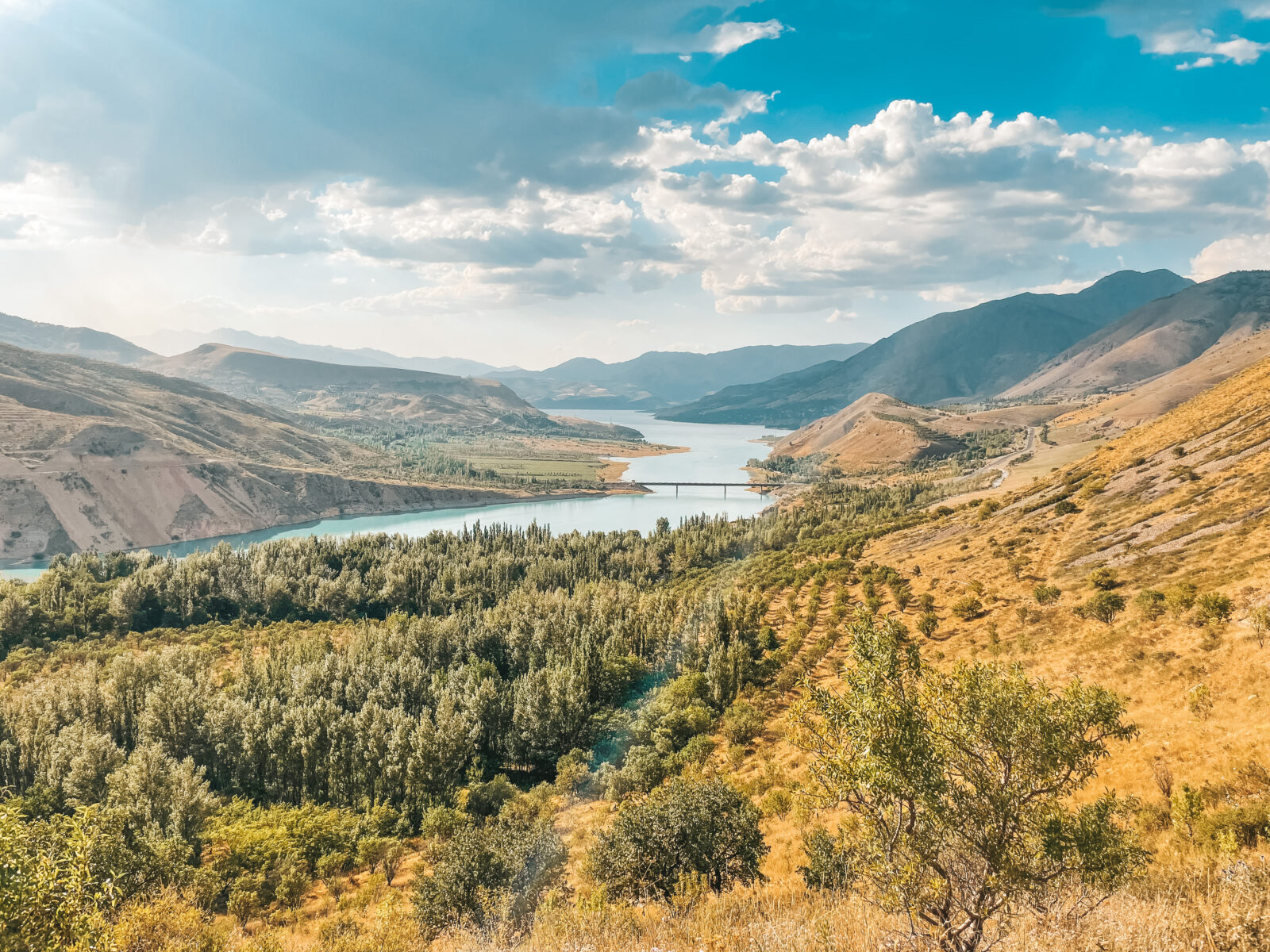
    After lunch—Charvak Reservoir, a man-made lake nestled among the mountains about 80 km northeast of Tashkent. Depending on the weather and the group’s preferences, we’ll take a boat ride or go paragliding. Overnight stay at a mountain hotel, far from the noise of the city.

  3. Day 3 Urungach Jade Lakes

    Nature Day. A minibus departs from the mountain hotel and heads to the village of Urungach in the Ugam-Chatkal National Park: the trip takes about four hours one way and follows a scenic mountain route with views of gorges and forests.

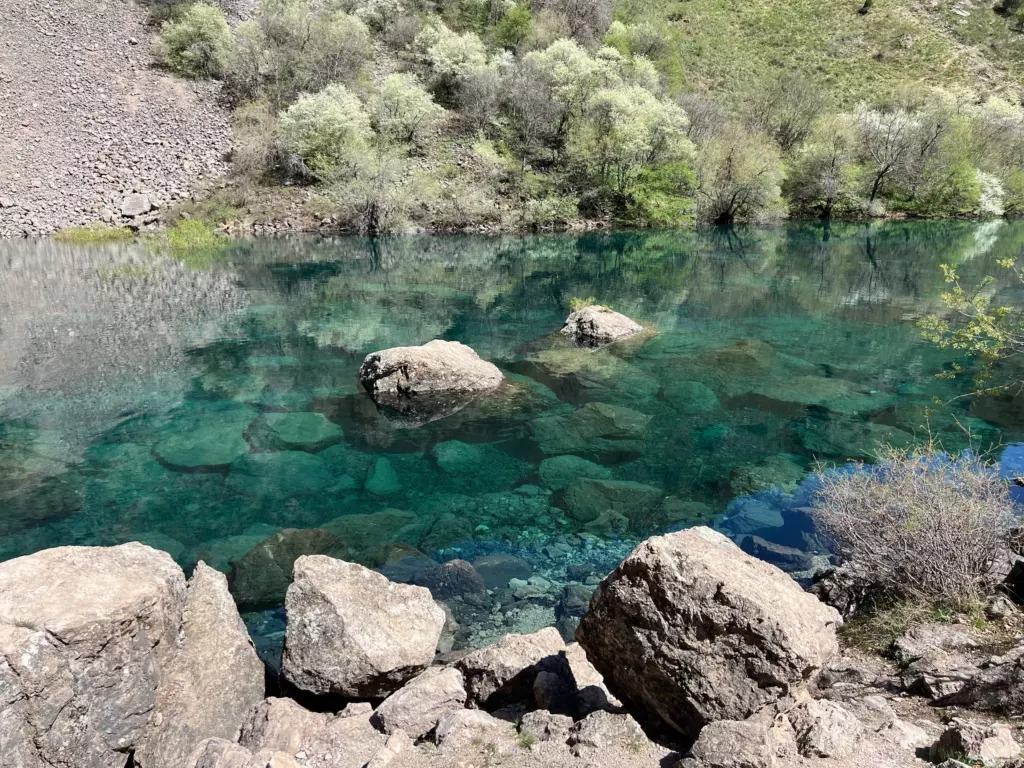
    Jade Lakes got their name from the rich emerald-green color of the water, which changes shade depending on the lighting. The hiking portion—to Lower and Upper Lakes—is up to 6 km at a leisurely pace; it’s suitable for people with basic physical fitness. Lower Lake is seasonal and is usually full from April through June. You can have lunch and relax on the shore, and during the warmer months, you can go for a swim.

    In the afternoon, we'll head back to the mountain hotel, have dinner, and spend the night in the mountains.

  4. Day 4 Paltau Waterfall → Samarkand

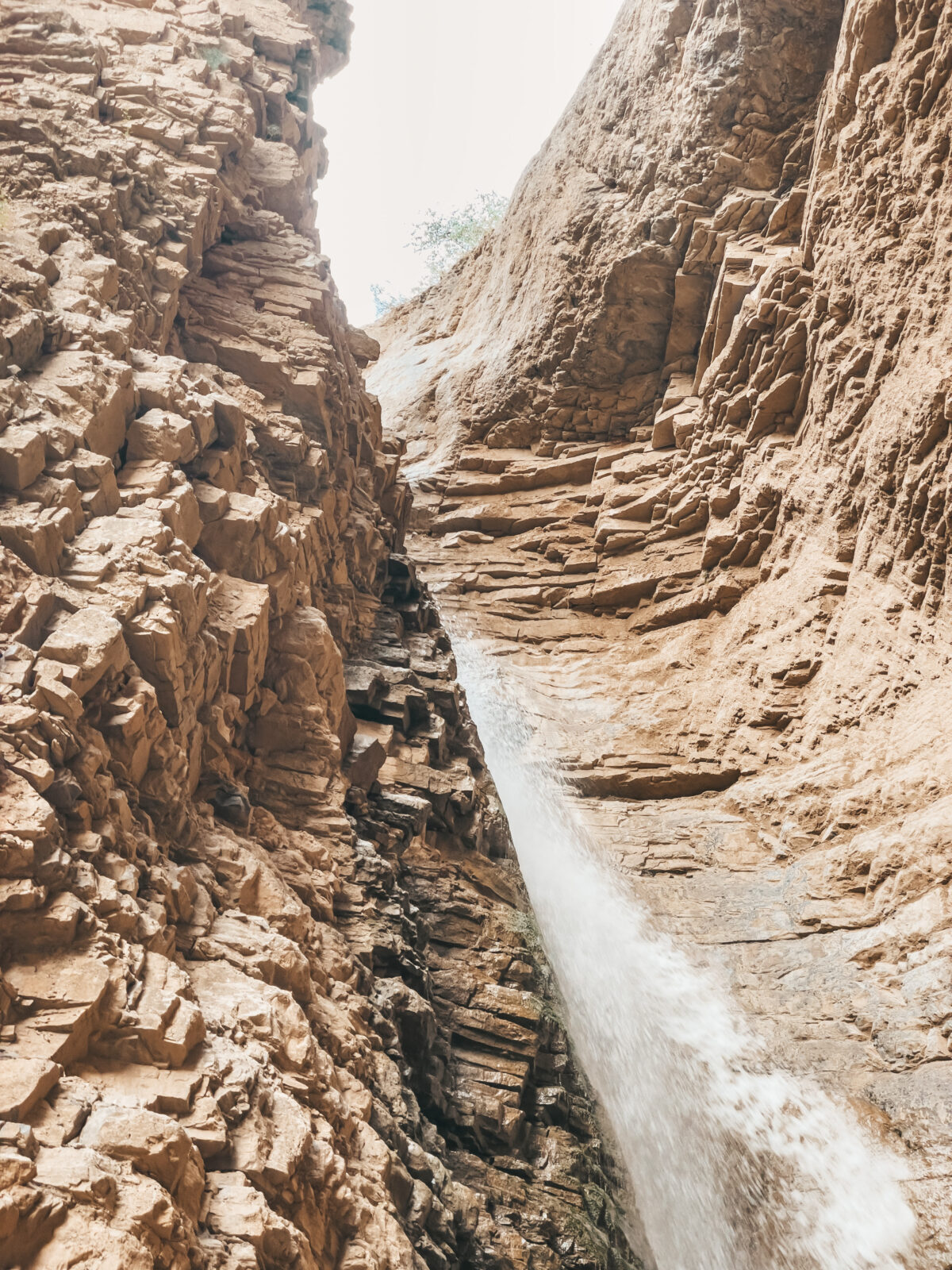
    Morning—at Paltau Falls in Ugam-Chatkal National Park. We purchase our national park admission tickets at the checkpoint, then continue on foot along a mountain trail. By around 12:00 p.m., you’ll be at the waterfall, which is about 38 meters high and surrounded by cliffs and greenery; it has the highest water flow in the spring and early summer. Time to relax, take a walk, and enjoy a light snack—a beautiful way to wrap up the mountain portion of the trip.

    After returning to the vehicle, we’ll travel to Samarkand—about a 4-hour drive. In the evening, we’ll check into the hotel and have some free time; dinner is on your own—you can choose a restaurant to your liking and experience the city at night.

  5. Day 5 Samarkand—Tamerlane's capital

    Samarkand—one of the world’s oldest cities and the former capital of Tamerlane’s empire—is home to monuments listed as UNESCO World Heritage Sites. Today, the entire city—from its main square to the crafts for which it was famous—is a sight to behold.

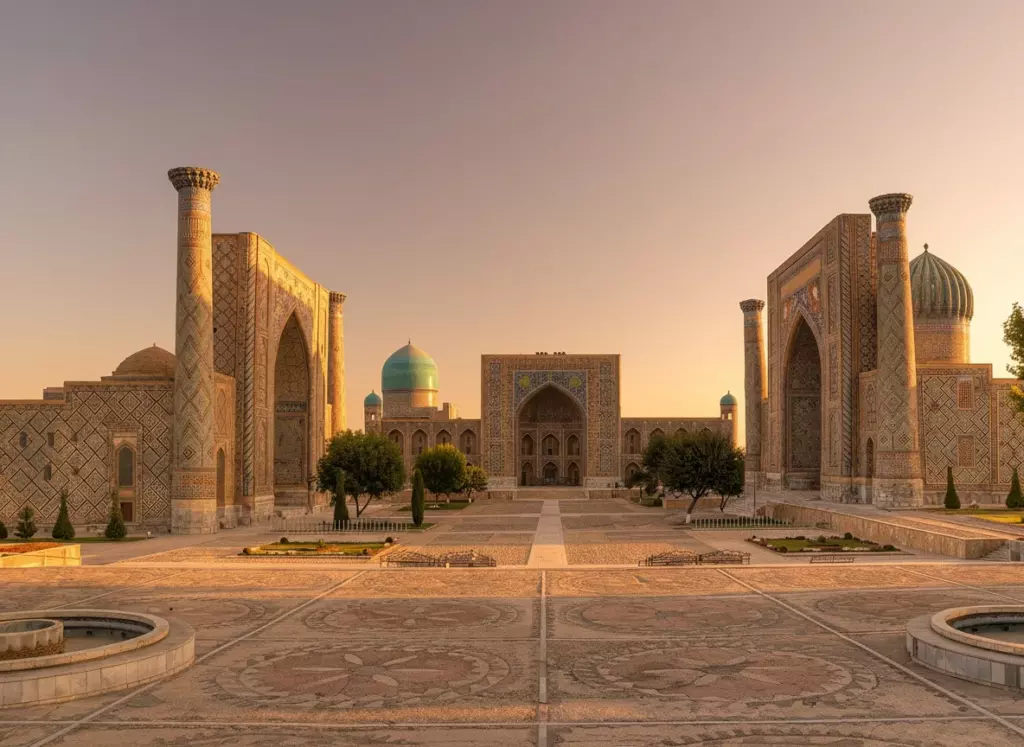
    The morning begins at the Gur-e Amir Mausoleum—the final resting place of Amir Temur and the Timurids, featuring a blue dome, carved marble, and murals. A short walk through the historic streets leads to Registan Square: the three madrasahs—Ulugbek, Tilla-Kari, and Sher-Dor—form Samarkand’s main architectural ensemble and are one of the symbols of Uzbekistan. Next is the Bibi-Khanym Mosque (exterior view) and the Shah-i-Zinda Necropolis, a complex of mausoleums for Samarkand’s nobility featuring rich mosaics and ornamentation. The descent from Shah-i-Zinda leads to the Siyab Market—the city’s main market, offering fruits, spices, nuts, and traditional sweets.

    After lunch—the crafts that have made the city famous: the Samarkand paper factory, where paper is made from mulberry trees using 12th-century techniques and where you’ll learn why it was prized far beyond the region, and the silk factory with its weaving traditions and products made from natural silk. The day concludes with a visit to the Mausoleum of Saint Daniel—a place of pilgrimage for followers of various religions—and the Ulugbek Observatory, named after the outstanding 15th-century astronomer and ruler.

    In the evening—dinner and free time. Optional: the El Merosi costume and dance theater (it’s best to book in advance).

  6. Day 6 Aydarkul and a Night in a Yurt in Kyzylkum

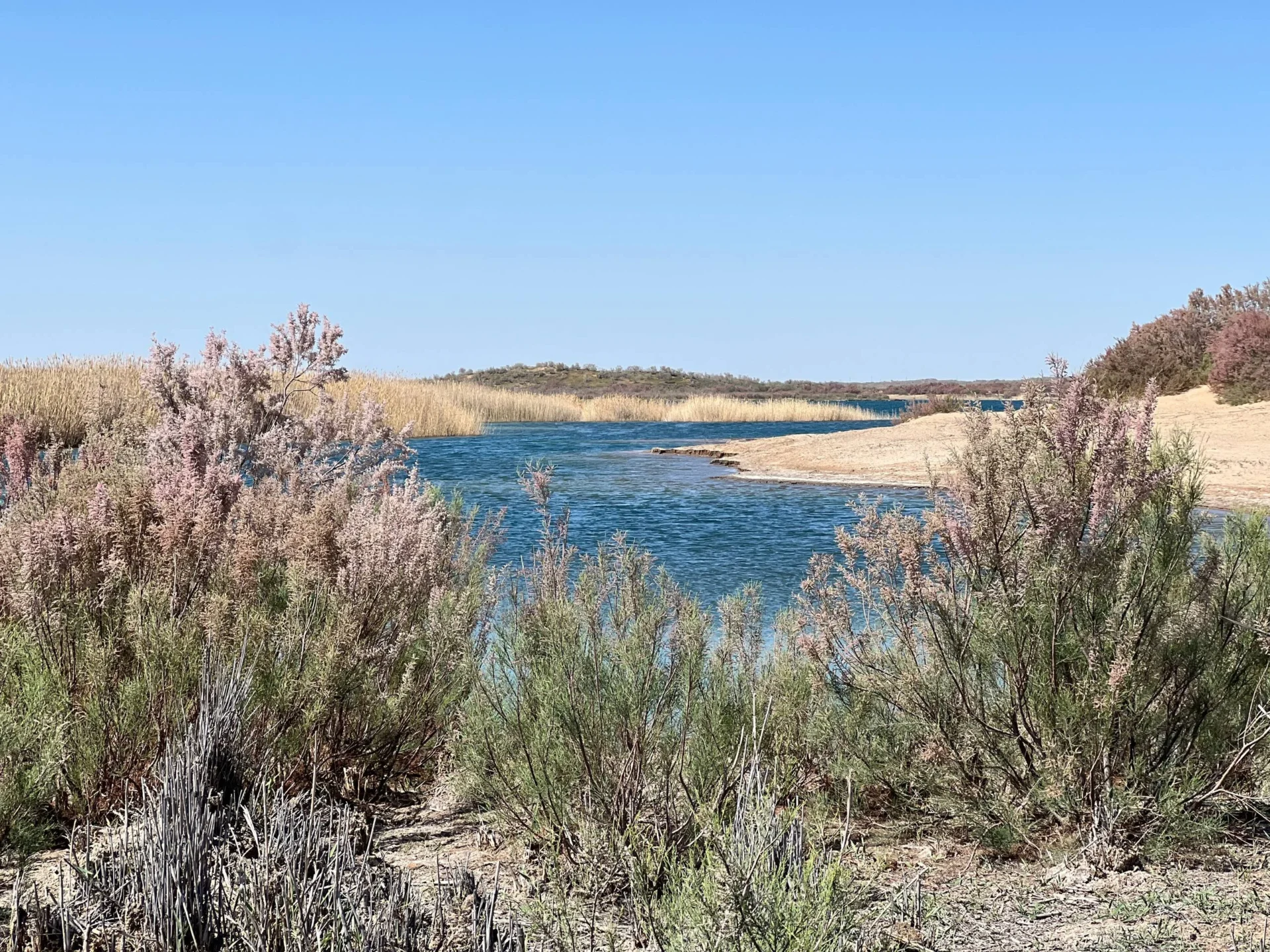
    From Samarkand to Lake Aydarkul. This large freshwater lake was created during the Soviet era and has become a true oasis amid the sands. A sandy beach, swimming in comfortably warm water, and lunch on the shore—a leisurely day after a full day of excursions.

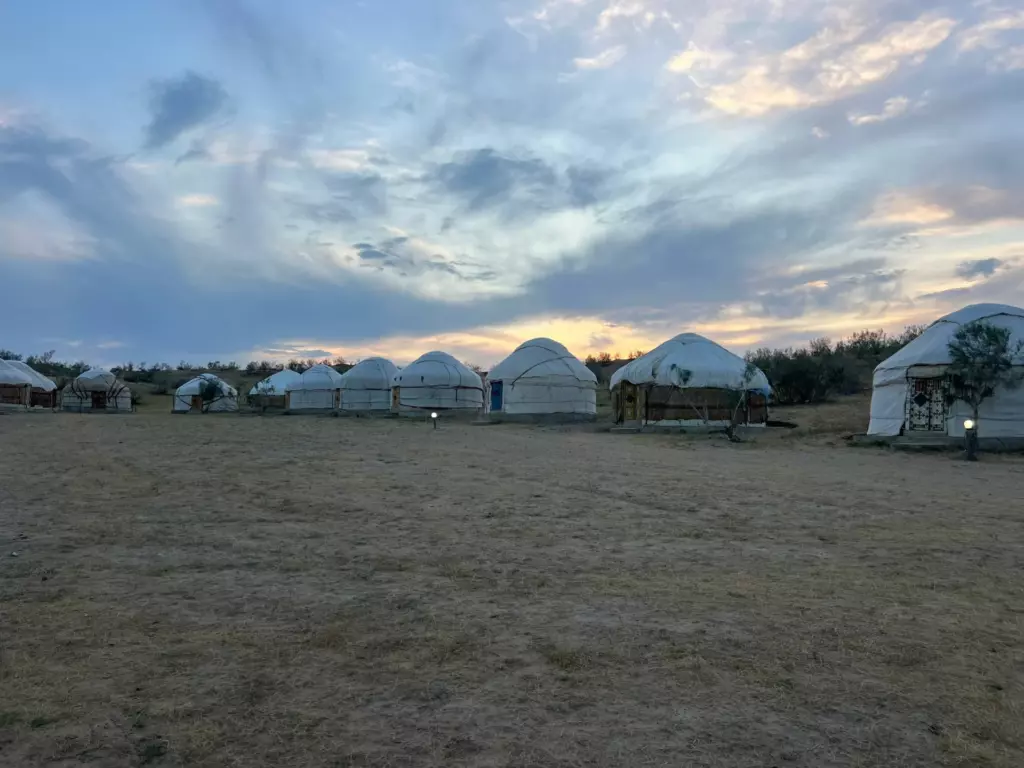
    In the afternoon—deep into the Kyzylkum Desert, one of the largest in Central Asia, stretching between the Amu Darya and Syr Darya rivers. Overnight stay at a yurt camp: furnished and lit yurts, dinner, live music, and songs by an akyn around the campfire—an introduction to nomadic traditions under the starry sky.

  7. Day 7 Nurata → Bukhara (optional: Gijduvan)

    In the morning—Nurata: the mosque and mausoleums, a fortress attributed to Alexander the Great, and a sacred spring—a place of pilgrimage. Lunch at a traditional teahouse.

    On the way to Bukhara—the 13th-century Sardoba, an ancient reservoir that served the caravans of the Silk Road—is a vivid example of medieval Eastern engineering. Optional: a stop in Gijduvan, a town of pottery artisans, where you can see how pottery is made and buy handmade souvenirs.

    In the evening—Bukhara: check-in and a first stroll through the old town, either on your own or with a guide. Optional: a working 16th-century hammam offering traditional body scrubs and massages (best enjoyed before dinner or 1.5 hours after).

  8. Day 8 Bukhara—a city that is two and a half thousand years old

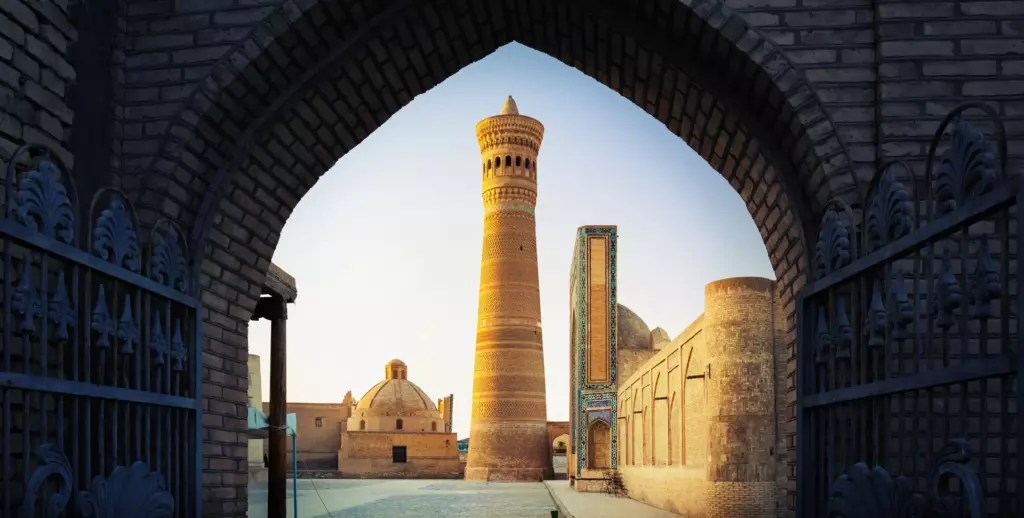
    Bukhara is more than 2,500 years old, and for centuries it has been a religious, commercial, and cultural center of the region: more than 140 architectural monuments have been preserved here, and the historic center is listed as a UNESCO World Heritage Site. Full-day guided tour of the old city.

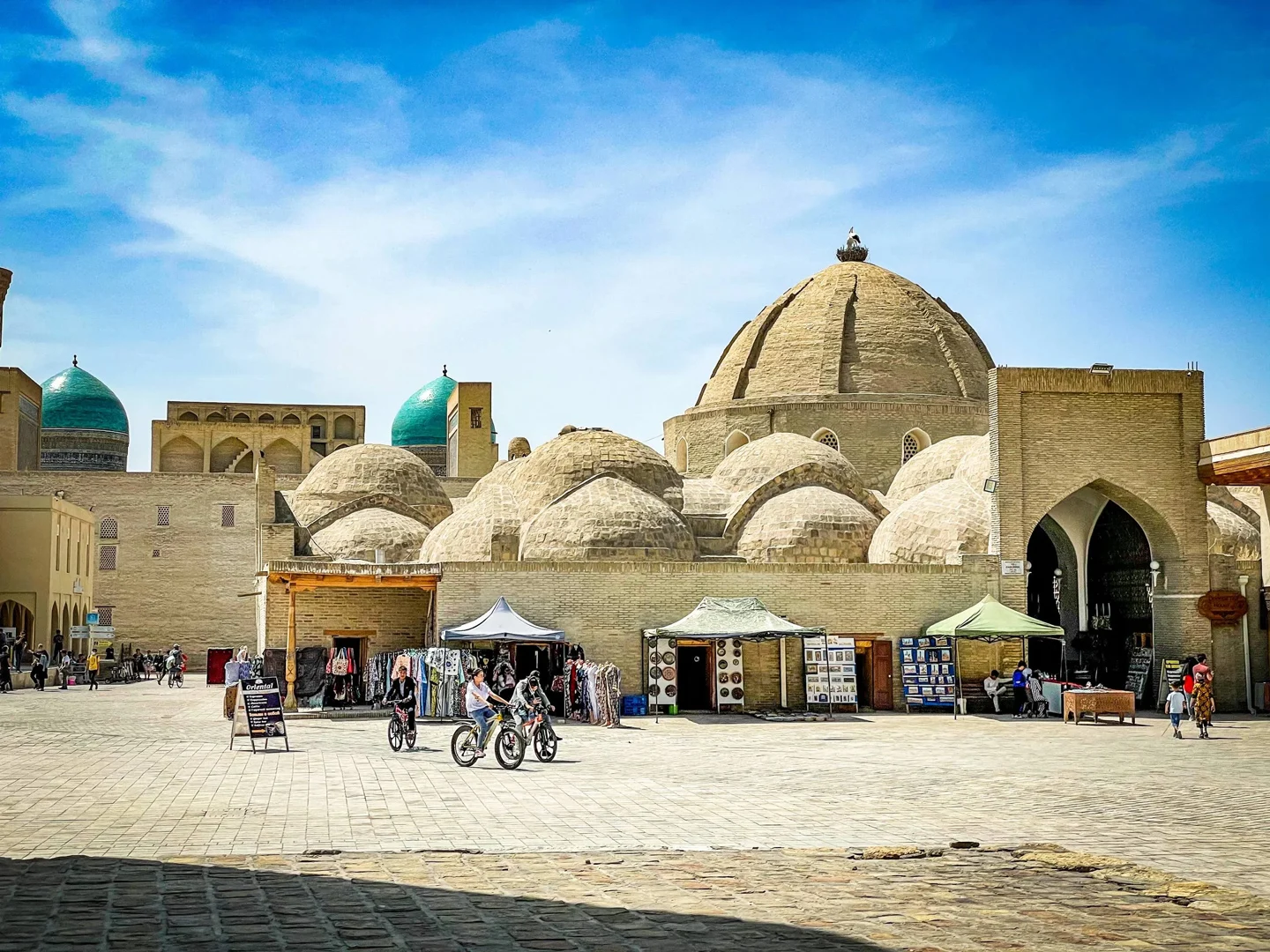
    Morning—a journey through power and faith: the Ark Fortress, an ancient citadel and the residence of the Bukhara emirs; the Poy-Kalon complex with its minaret and the Kalon Mosque; the still-active Mir-Arab Madrasah—one of Central Asia’s leading Islamic educational centers; the 15th-century Ulugbek Madrasah; and the 16th-century trading domes, where artisan shops still operate today.

    After lunch at a restaurant in the old city—the Magoki-Attori Mosque, one of the oldest in the region; the workshop of a famous Bukhara puppeteer; the Lyab-i Hauz complex with its man-made pond—a favorite spot for walks; and the monument to Khoja Nasreddin, a hero of Eastern folklore. In the evening—dinner at a restaurant.

  9. Day 9 Bukhara → Alat/Farap Border Crossing → Ancient Merv → Mary

    The day of crossing the border. At the Alat/Farap border checkpoint, a Turkmen guide meets the group, and after border formalities, the journey continues in Turkmenistan.

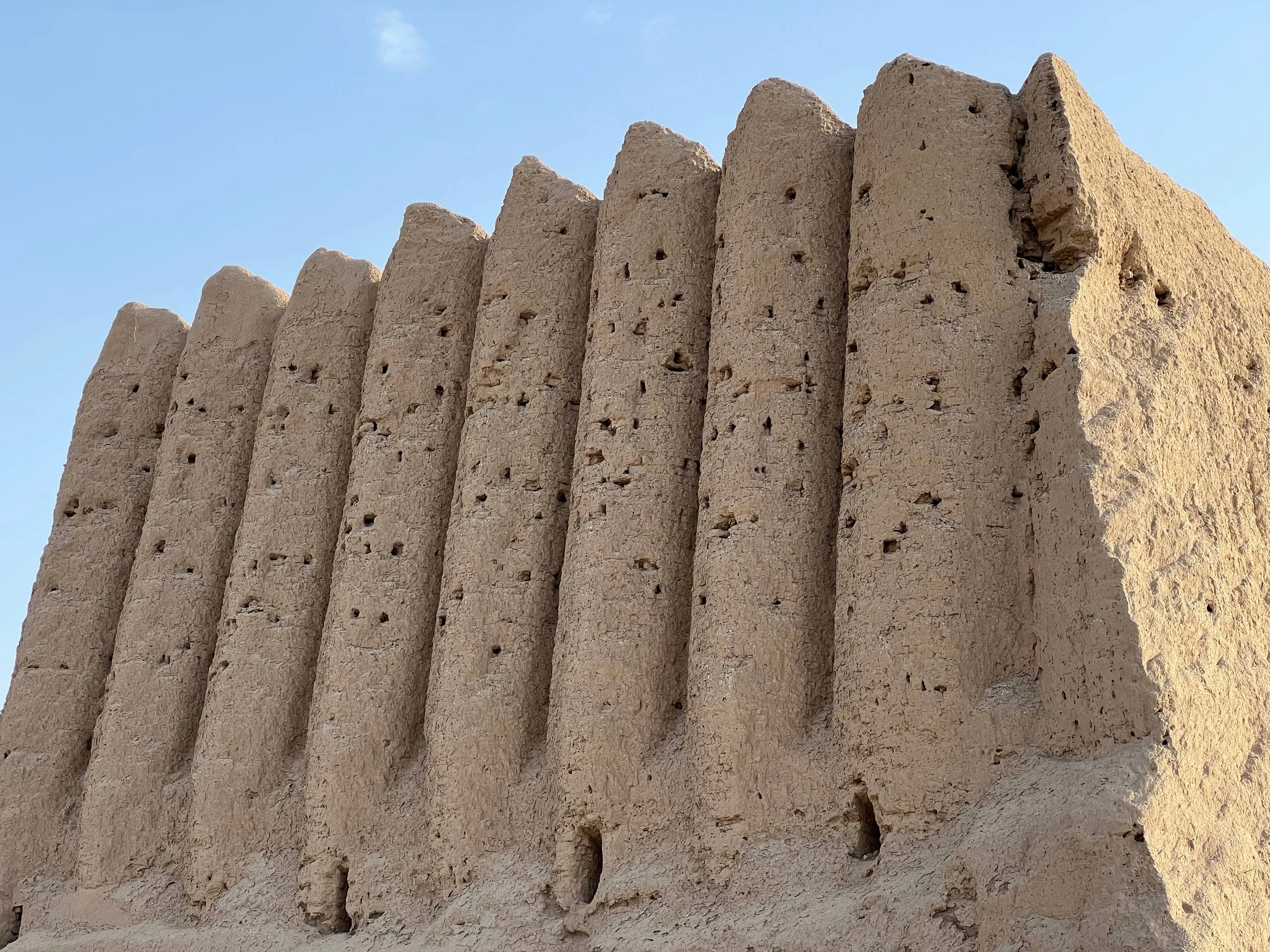
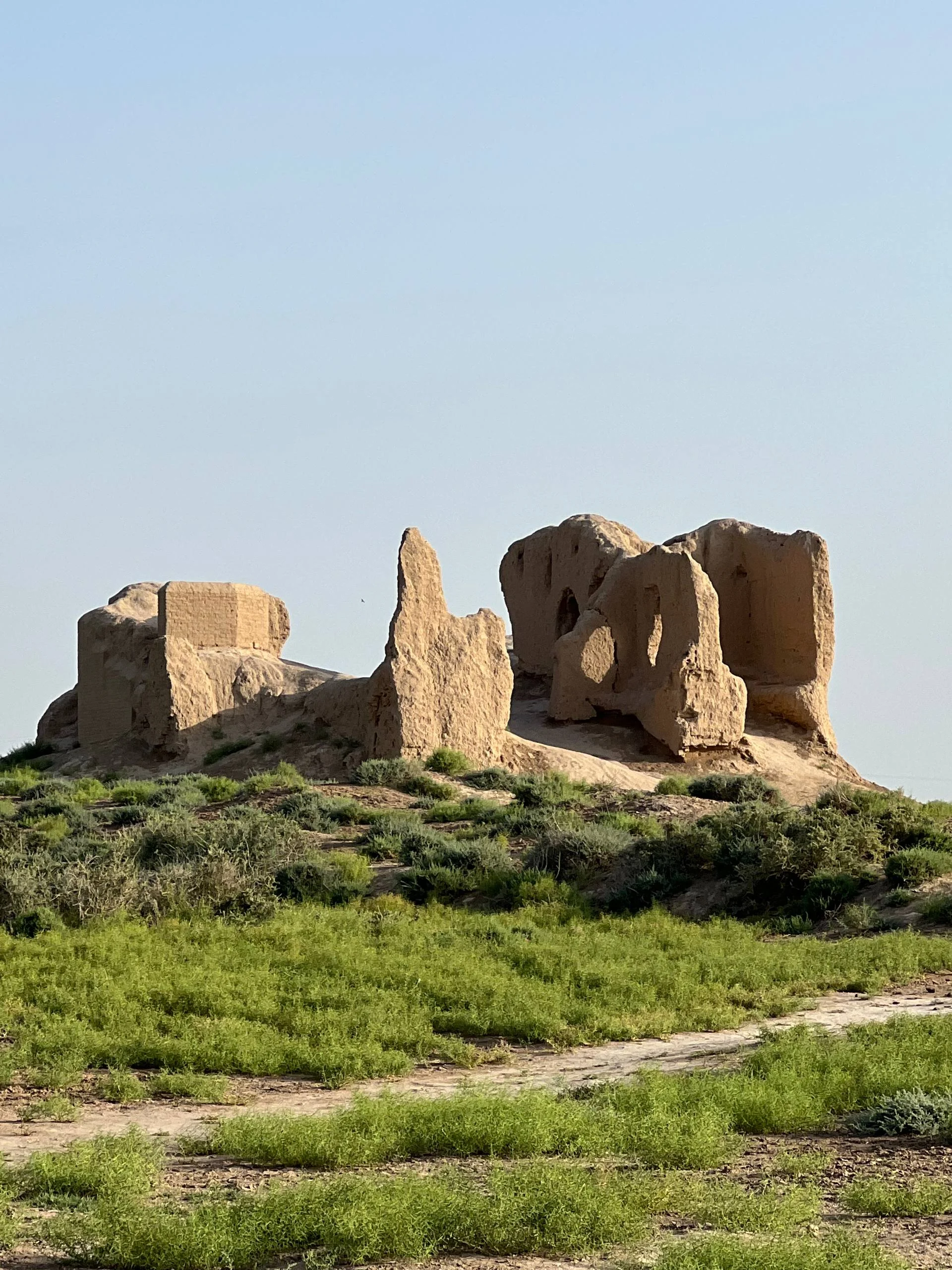
    The main stop is Ancient Merv, one of Central Asia’s most significant archaeological sites and a UNESCO World Heritage Site. The city existed for over 2,000 years, served as a center of trade, science, and culture along the Silk Road, and during its heyday rivaled Baghdad, Cairo, and Damascus. Accompanied by a guide, you’ll walk through the historical park from one ancient settlement to another: Gyz-Kala, Erk-Kala, Sultan-Kala, the mausoleum of Sultan Sanjar, and the religious complexes of Askhab, Yusup Hamadani, and Ibn Zayd—the ruins spanning several eras help convey the scale of this ancient metropolis.

    In the evening—transfer to Mary, check into the hotel, and relax.

  10. Day 10 Mary → Abivard → Annau → Ashgabat

    The road to the capital passes by monuments to the region’s ancient civilizations. The first stop is the ruins of Abivard, one of the centers of the Sassanid era: excavations show that the city covered a large area and played an important role in trade and administration. In the village of Annau, the ruins of the 15th-century Seyyid Jamal al-Din Mosque—an important monument of Islamic architecture—have been preserved.

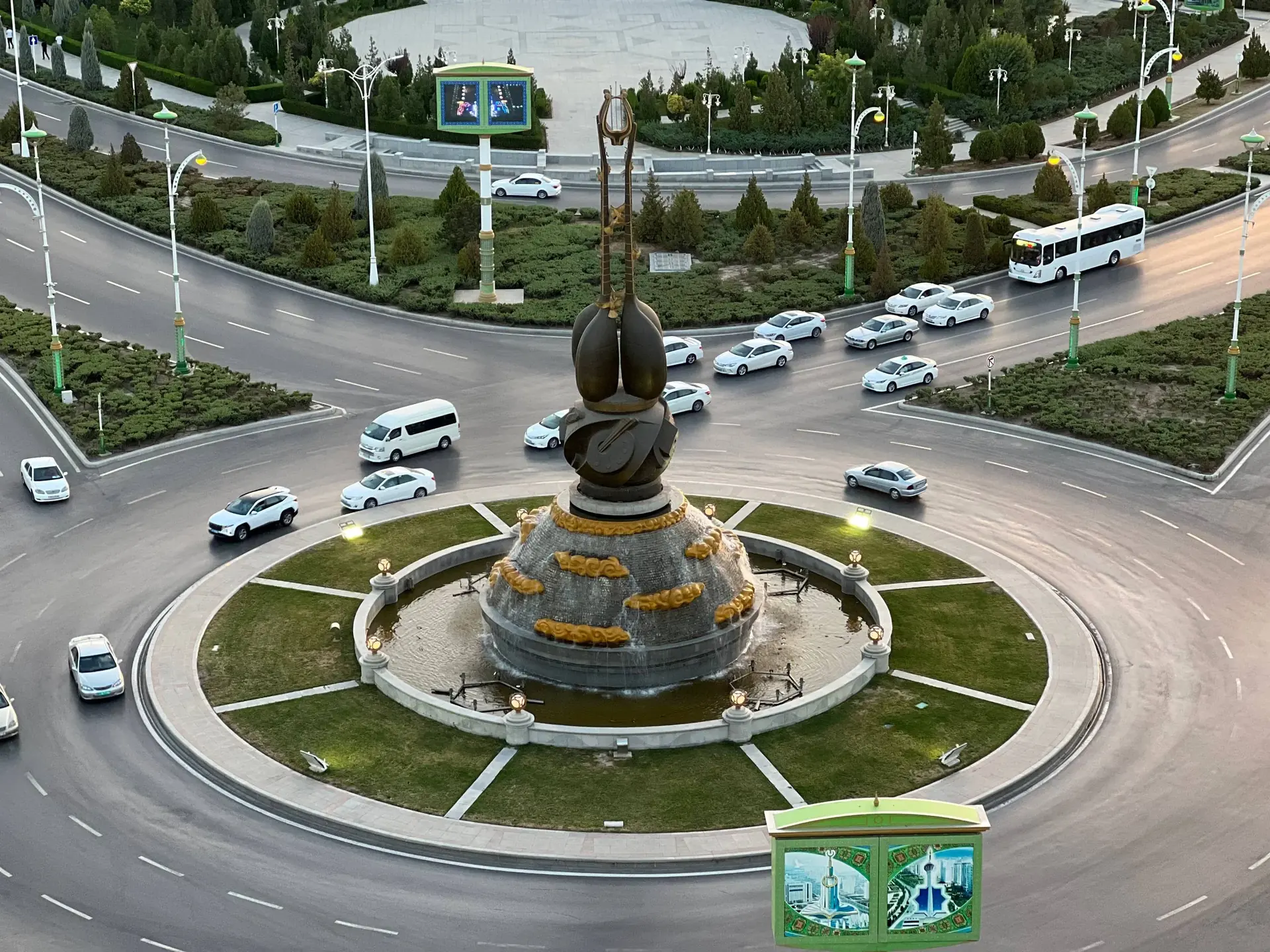
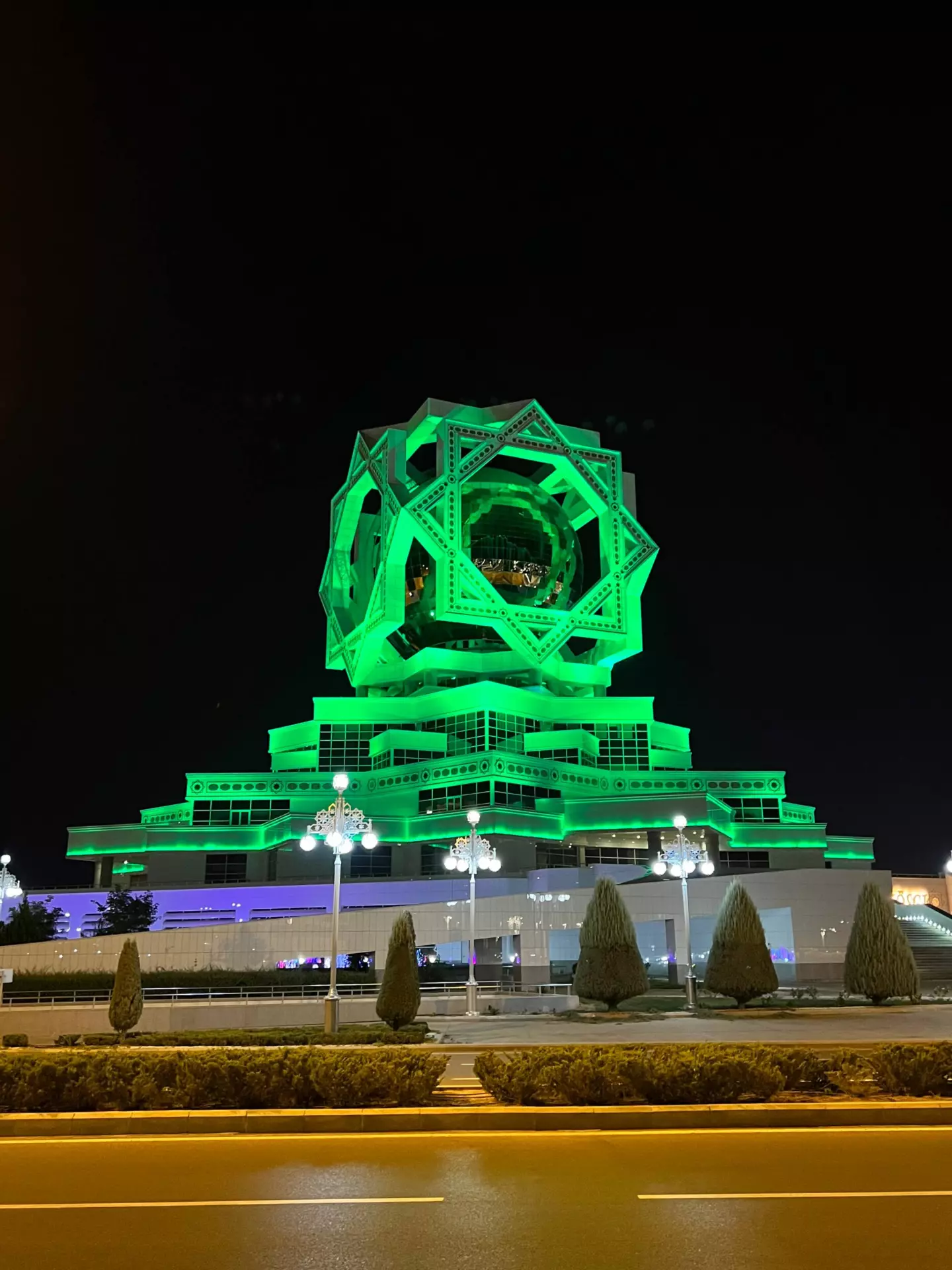
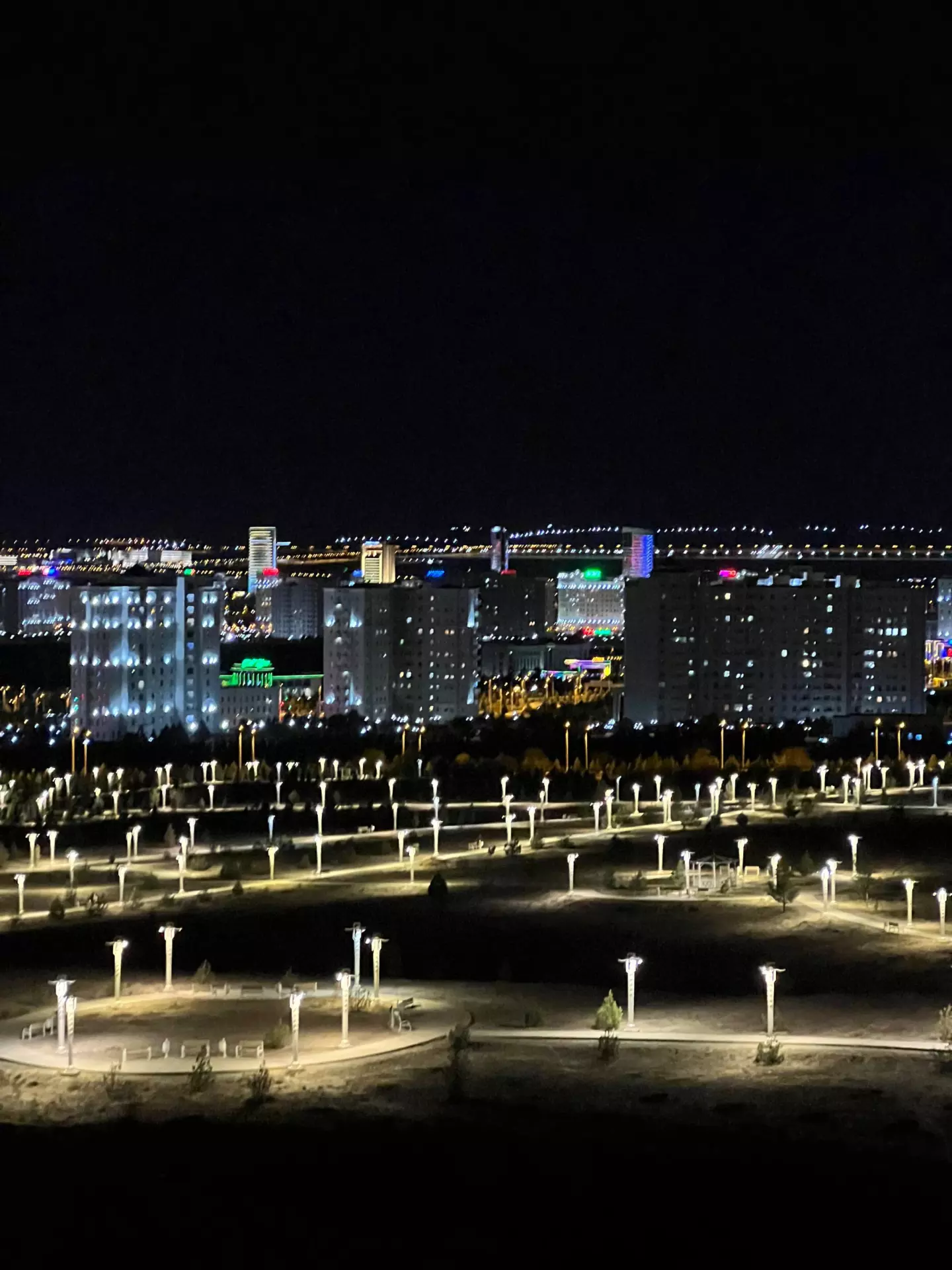
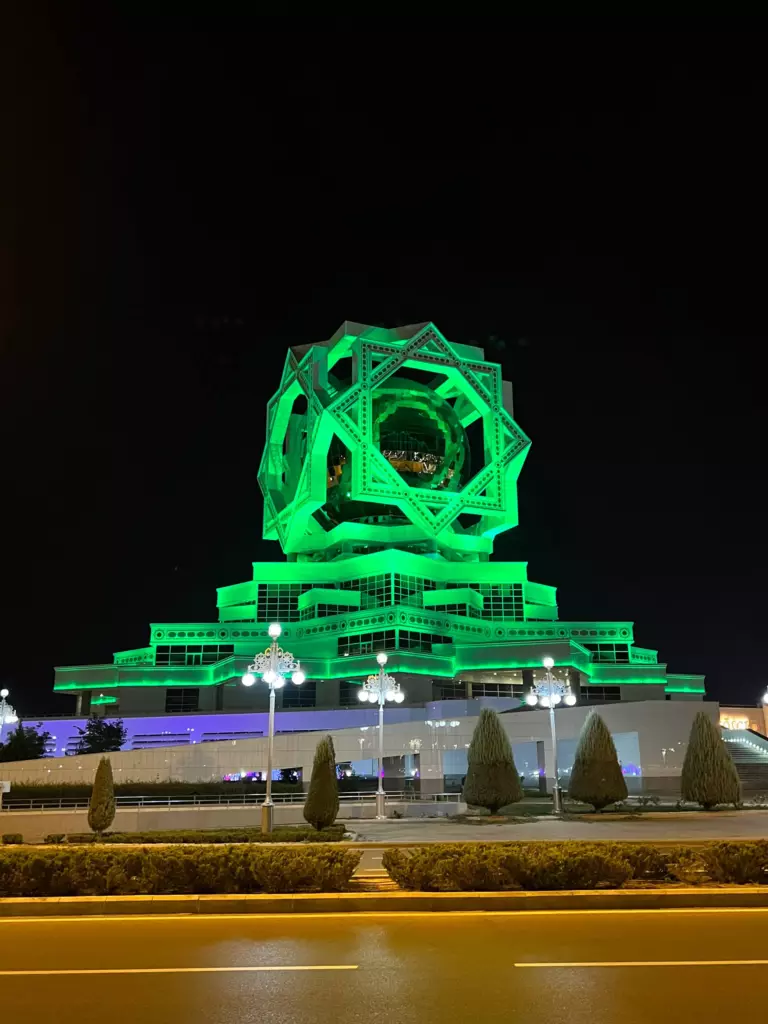
    Ashgabat stands in stark contrast to the ancient ruins. The city was almost entirely rebuilt after the 1948 earthquake and is listed in the Guinness Book of World Records for the number of white marble buildings. An evening sightseeing tour will showcase its boulevards, monuments, and white-marble architecture illuminated at night.

  11. Day 11 Darvaza Crater — “The Gates of Hell”

    The route heads north, deep into the Karakum Desert—one of the world’s largest deserts. Before setting out, we’ll stop at the Russian Bazaar in Ashgabat to pick up souvenirs and local goods.

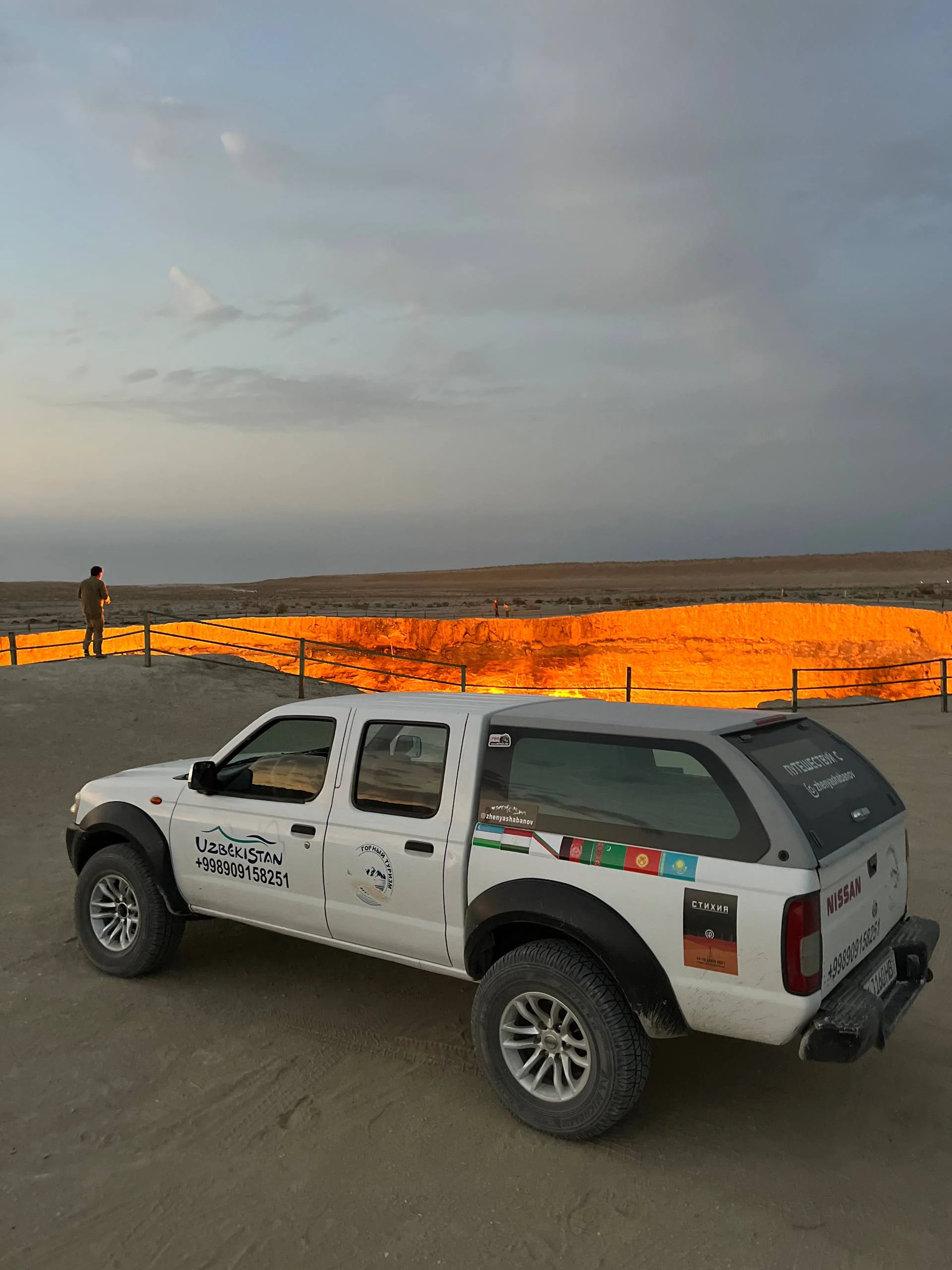
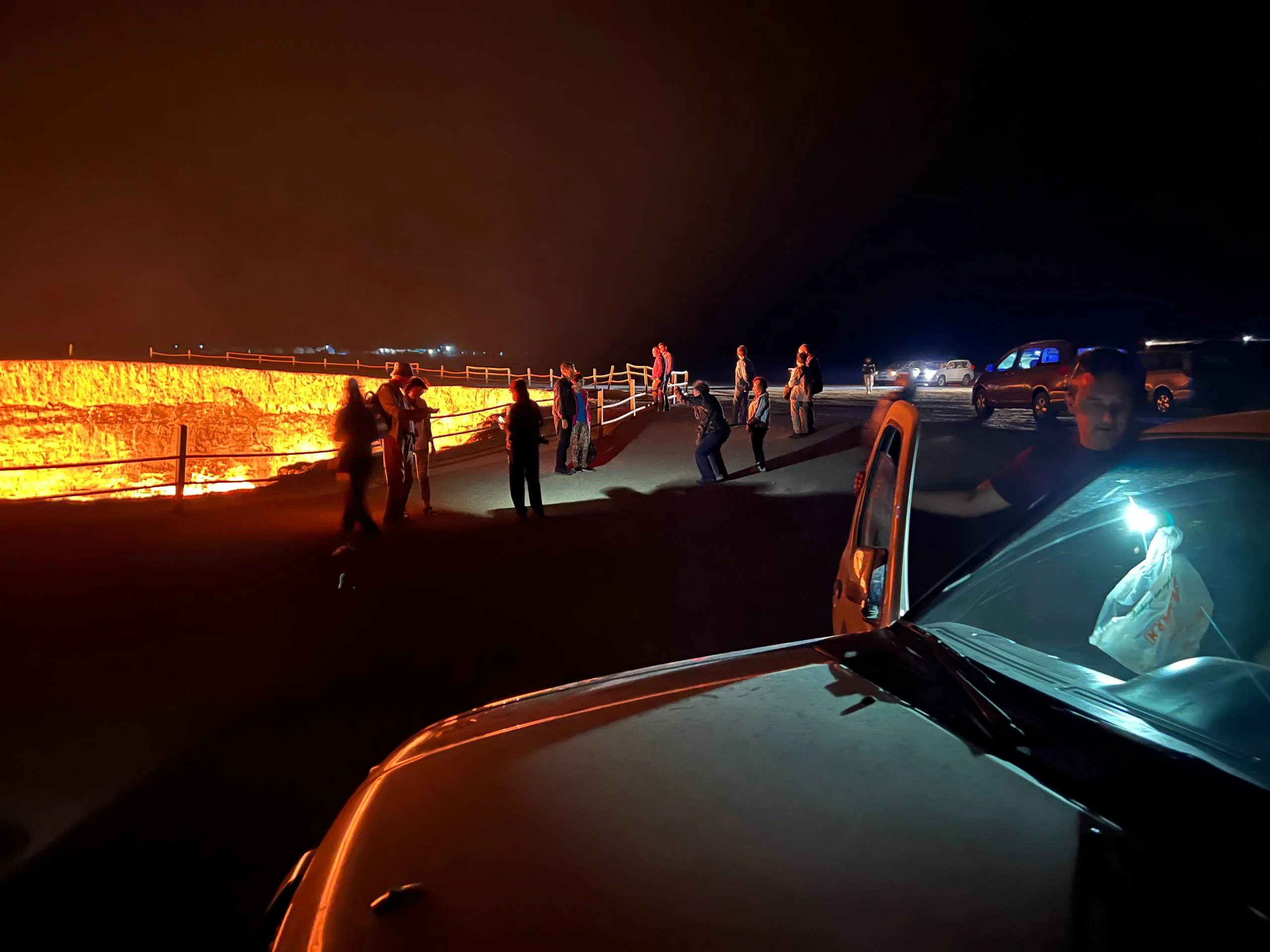
    Darvaza Gas Crater was formed in 1971 as a result of geological work: the crater, about 60 meters in diameter and more than 20 meters deep, is filled with burning natural gas, and the fire has been burning continuously for several decades. The crater is worth seeing twice—during the day and after dark, when it looks particularly impressive. In the evening, enjoy a picnic by the crater, take walks, and snap photos under the starry sky; spend the night in the desert near Darvaza.

  12. Day 12 Darvaza → Kunya-Urgench → Shavat Border Crossing → Khiva

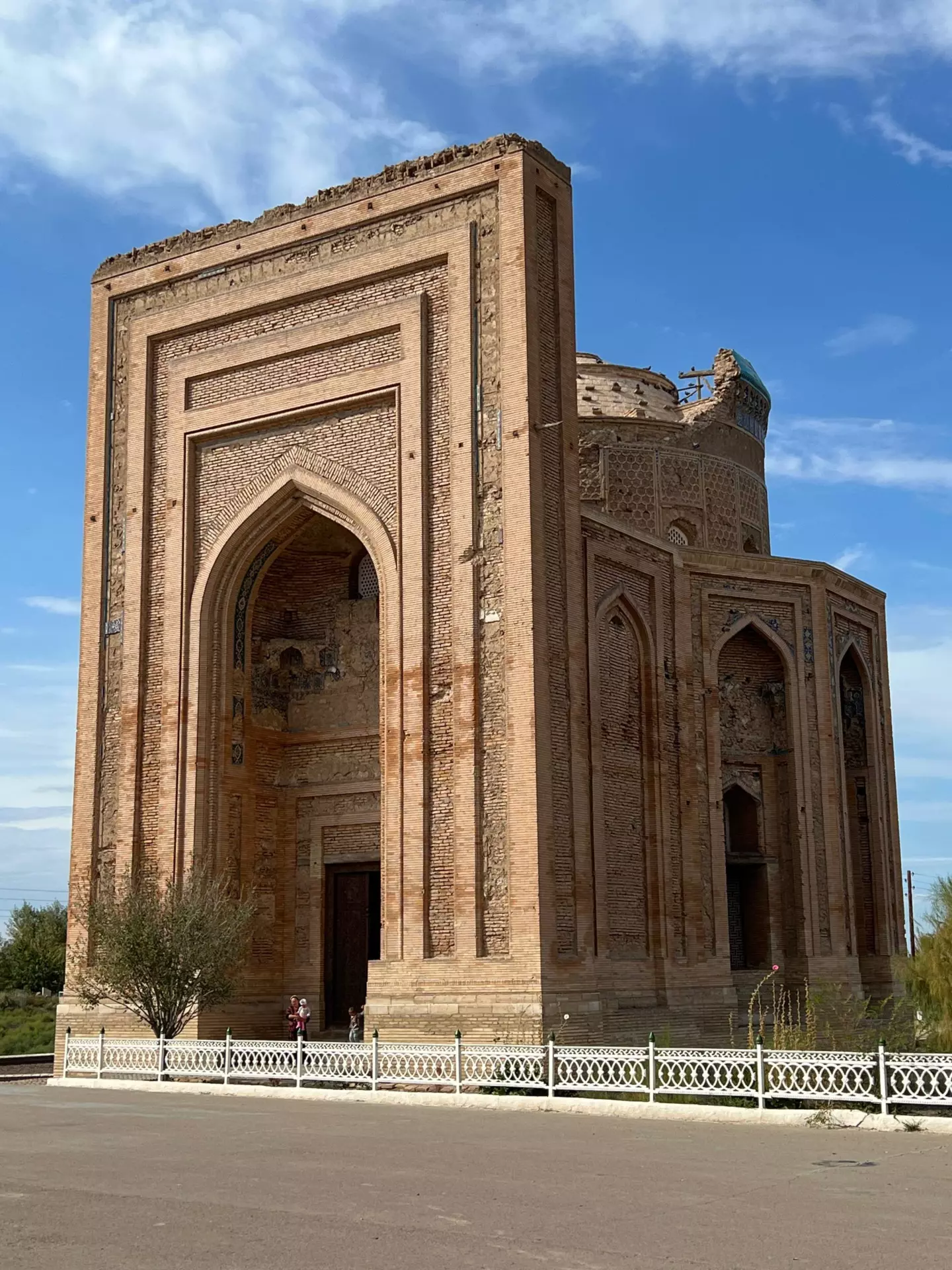
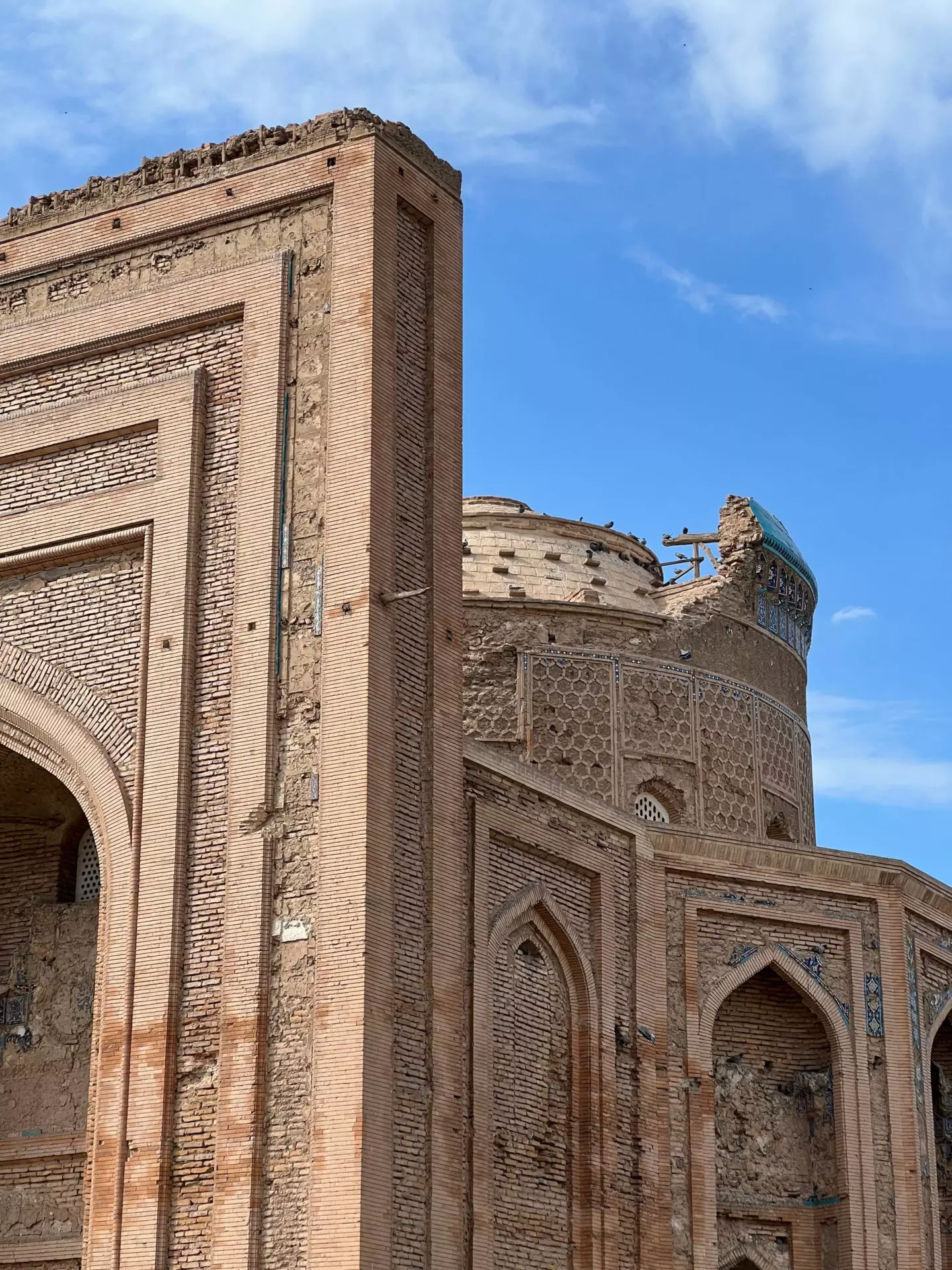
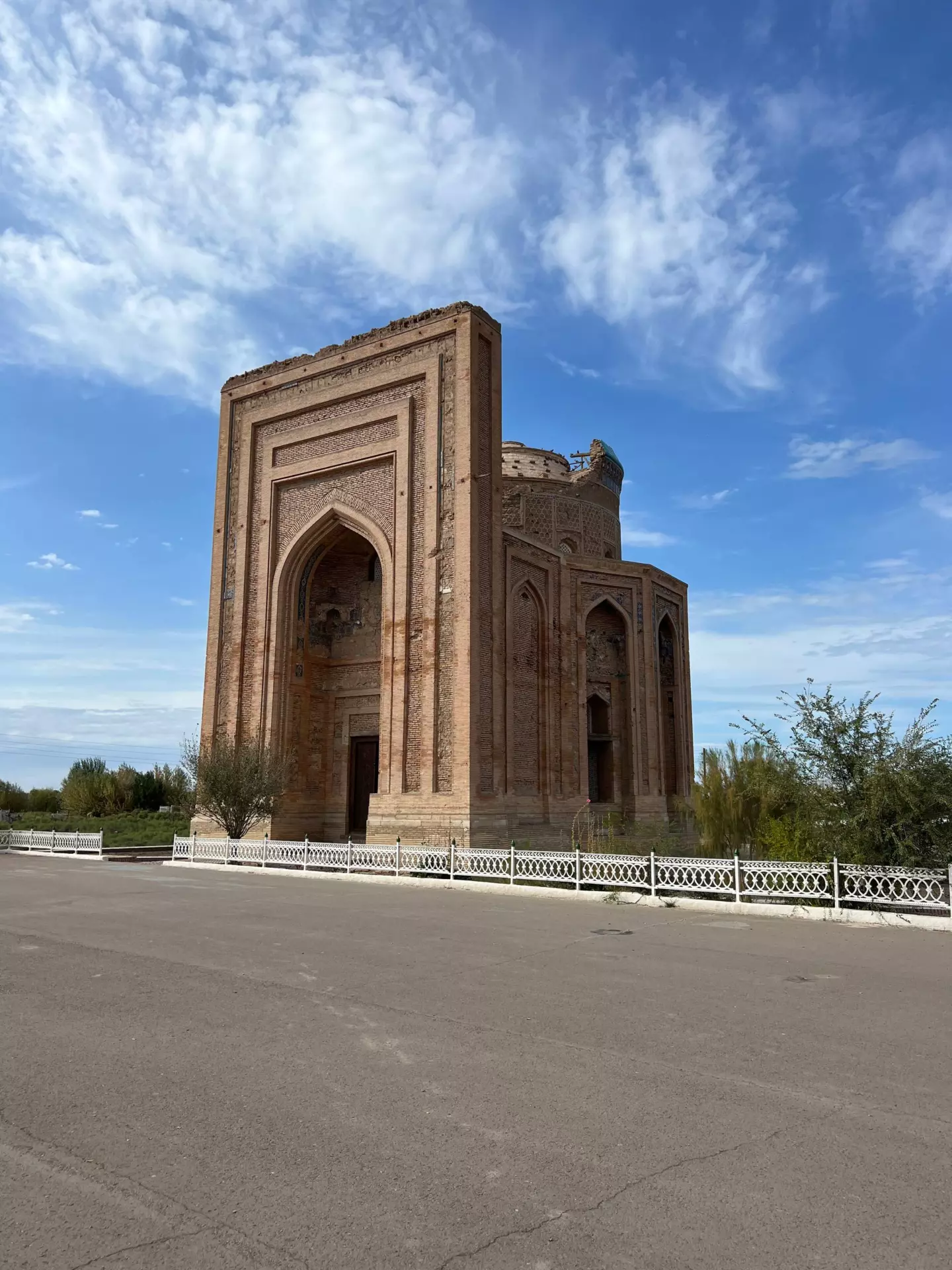
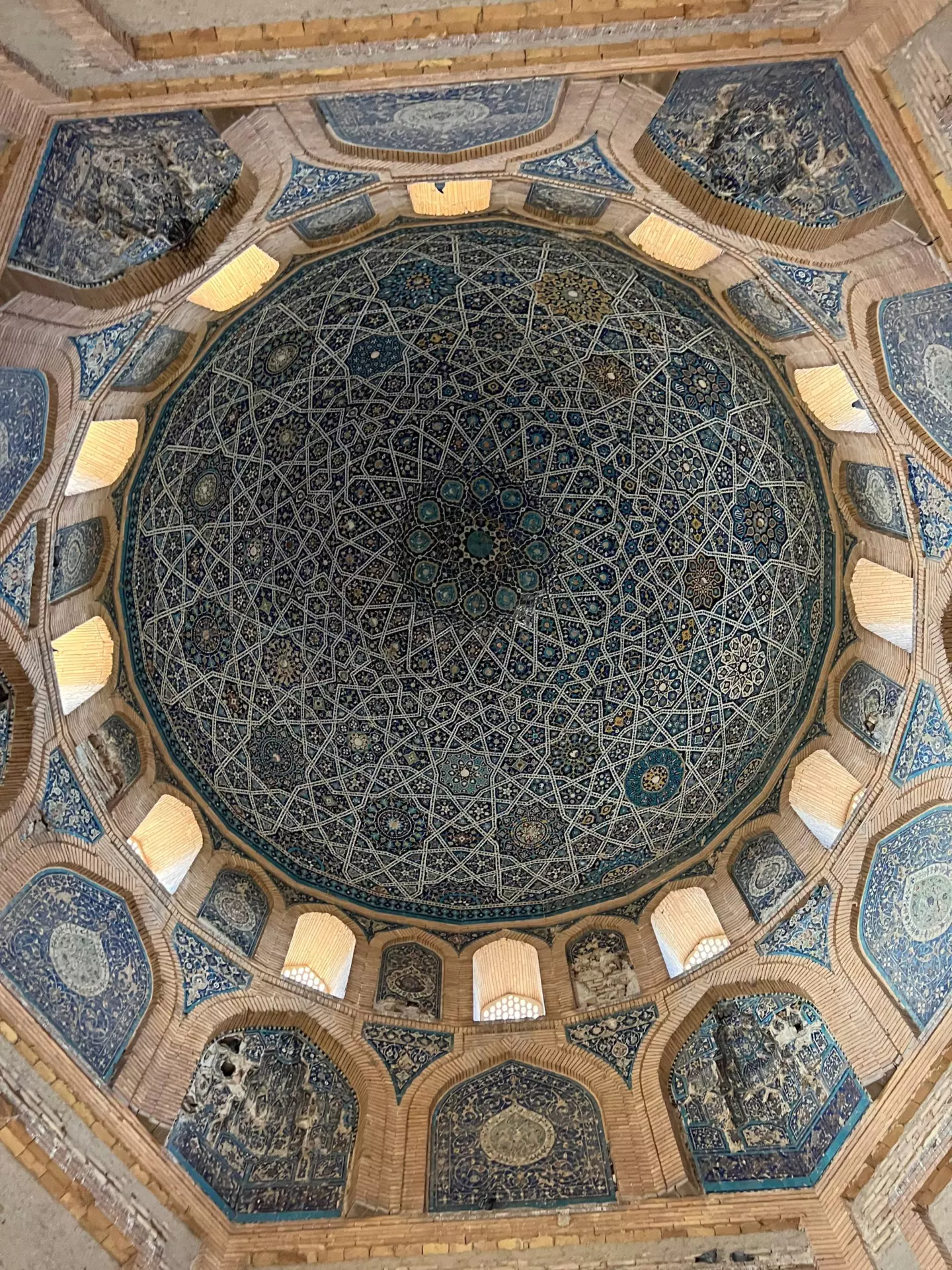
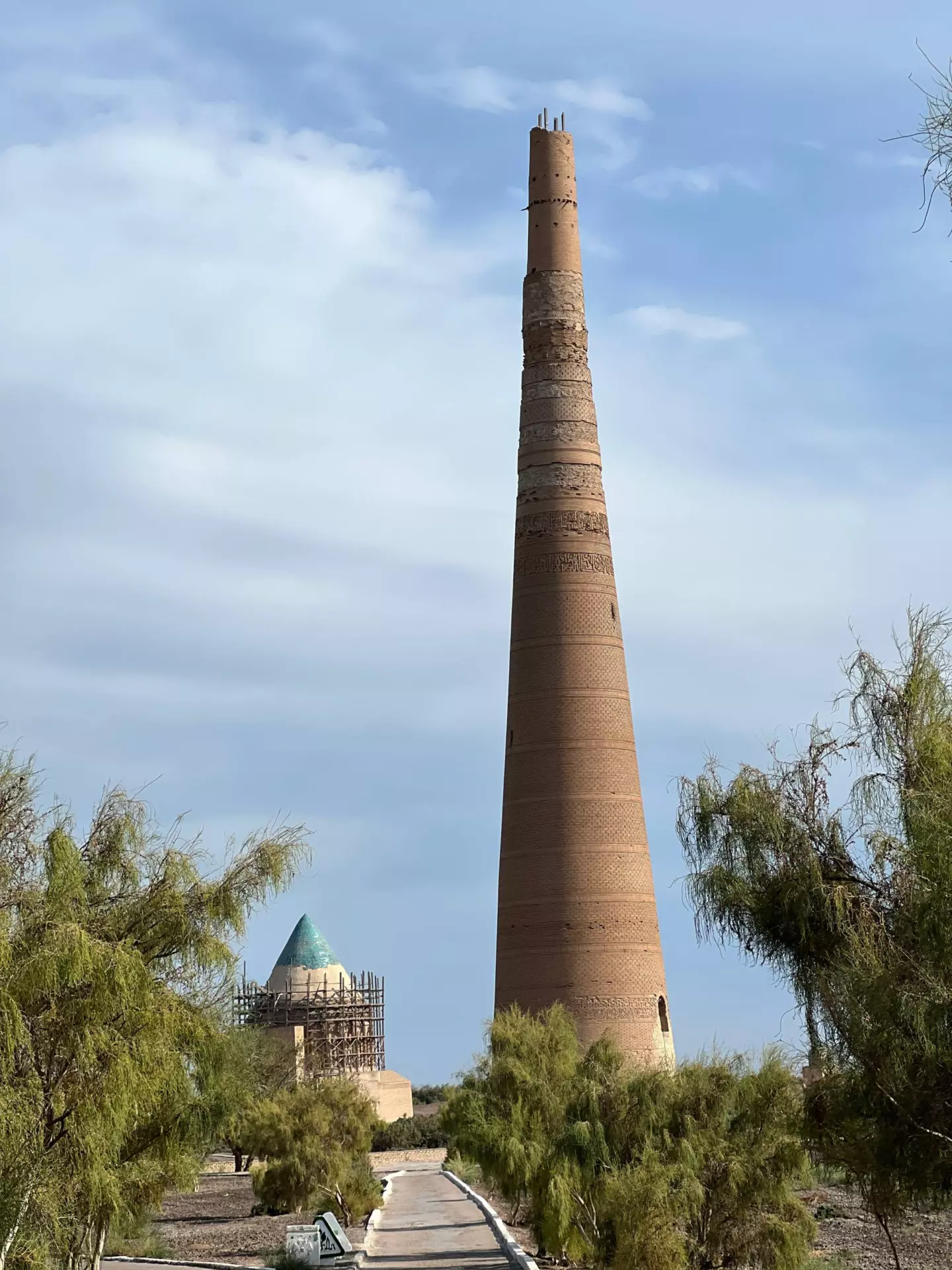
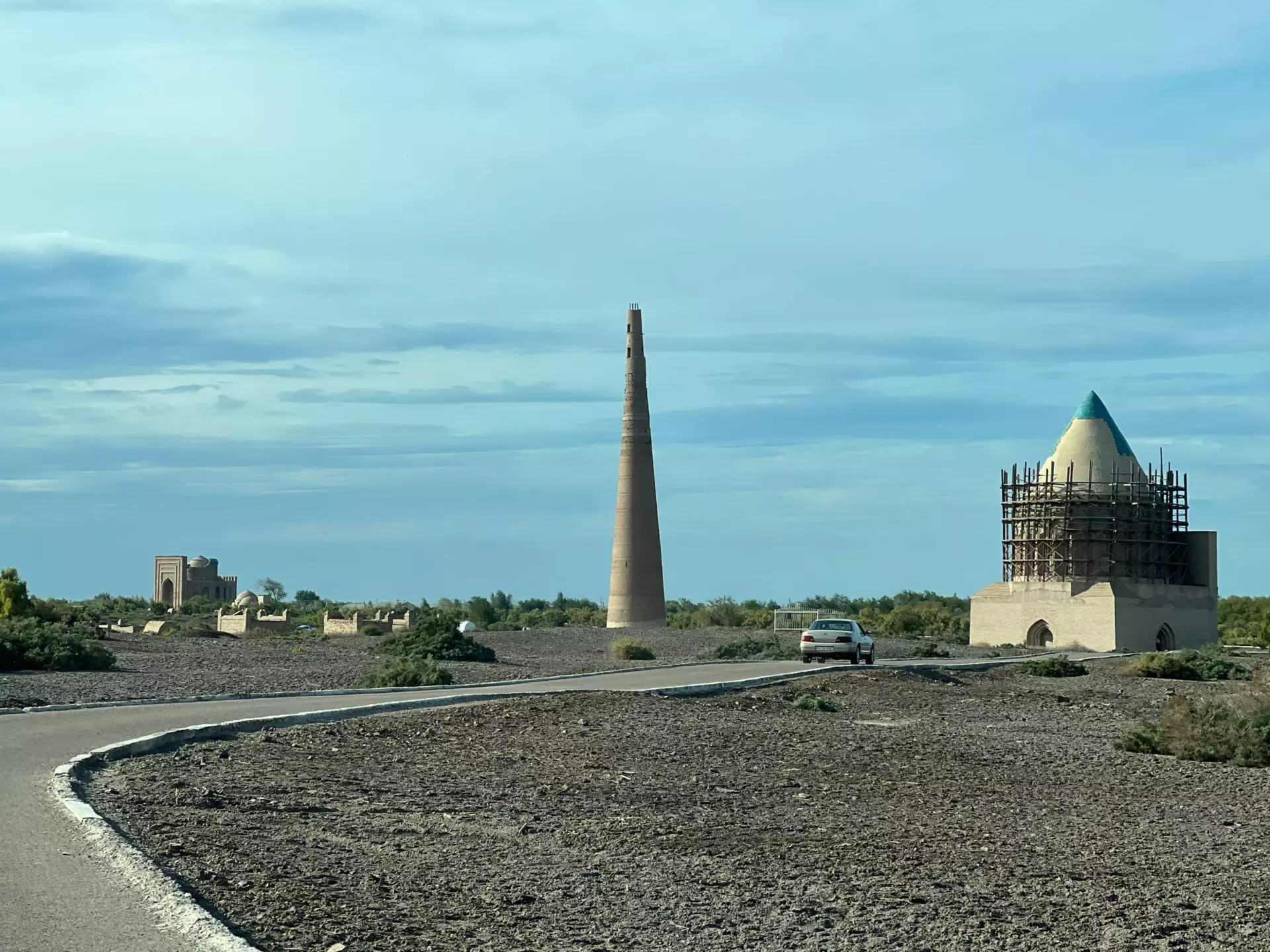
    In the morning—a drive north through desert landscapes that once again showcase the vastness and rugged beauty of Turkmenistan. Our destination is Kunya-Urgench: once the capital of a powerful state and an important hub on the Silk Road, today it is home to mausoleums and minarets dating from the 11th to the 14th centuries.

    After the tour, we’ll head to the Shavat border crossing, cross the border, and take a transfer to Khiva, which is already in Uzbekistan. Overnight stay in Khiva.

  13. Day 13 Khiva → Urgench: the museum city and departure

    The last day—Khiva, one of the best-preserved medieval cities in Central Asia. Its inner city, Itchan Kala, is a cohesive ensemble of minarets, madrasas, and palaces within the fortress walls, virtually untouched by modern development and listed as a UNESCO World Heritage Site.

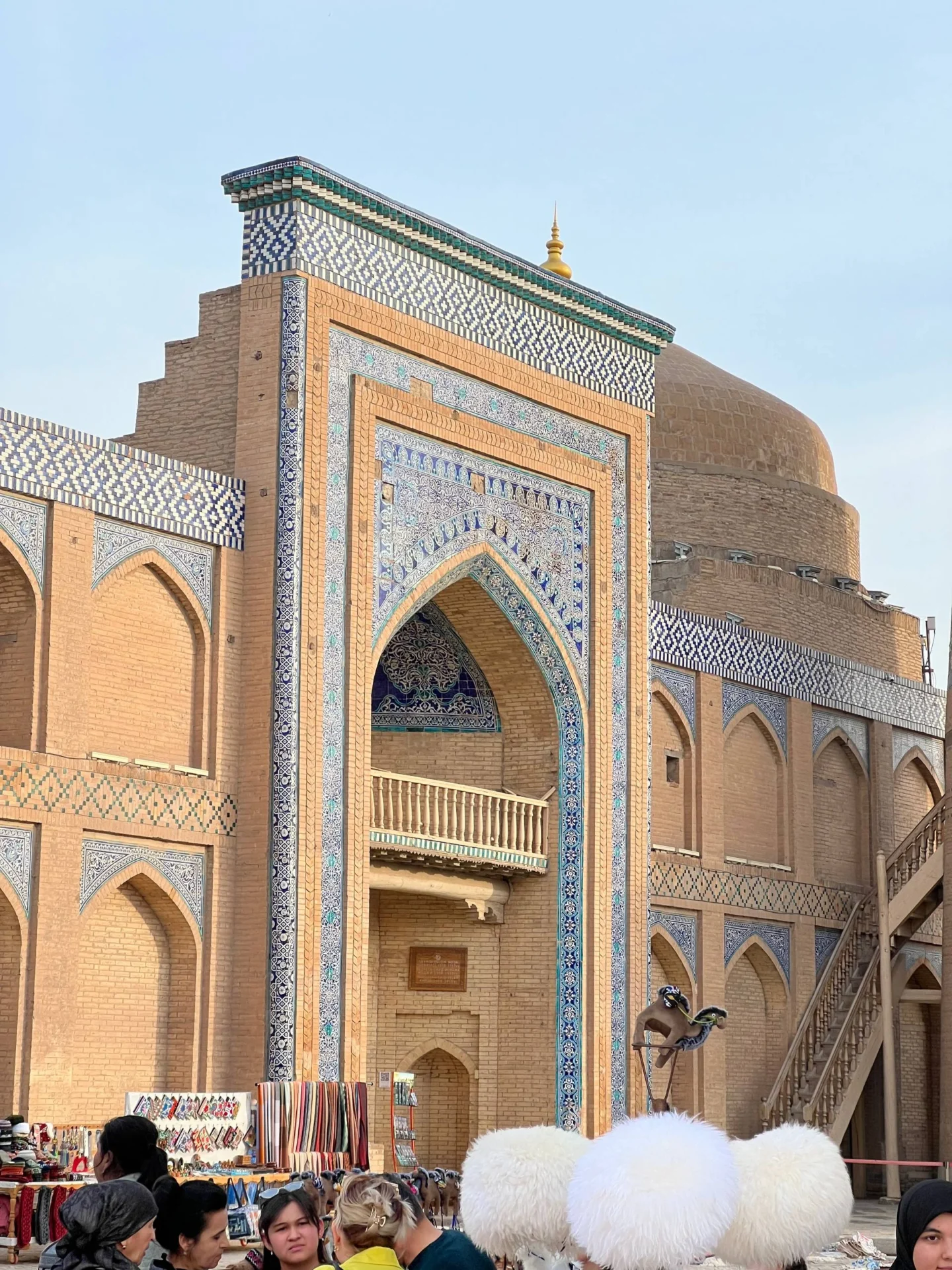
    In the morning—Khiva’s most iconic landmarks: the Muhammad Amin-Khan Madrasah and the Kalta-Minor Minaret, the Kunya-Ark Fortress, the Muhammad Rahim-khan Feruz Madrasah, and the Juma Mosque with its forest of carved wooden columns. At midday—lunch; if the group wishes—a master class on preparing traditional Uzbek dishes.

    After lunch—the mausoleum of Pahlavan Mahmud, a poet, philosopher, and national hero of Khiva; the Islam-Khoja Madrasah and Minaret—the city’s tallest minaret; the Tash-Khauli Palace Complex, the former harem of the Khiva khans; and an ancient caravanserai, where traditional Eastern shops still operate. To wrap up the day—free time for strolling and shopping, followed by a photo session in traditional costumes against the backdrop of the old city. Then—transfer to Urgench Airport and departure.

Tour program from Khiva

The same program in reverse: starting in Khiva (flying into Urgench) and ending in Tashkent.

13 days · tap a day to expand
  1. Day 1 Urgench → Khiva: A City-Museum

    The journey begins with your arrival in Urgench and Khiva—one of the best-preserved medieval cities in Central Asia. Its inner city, Itchan Kala, is a cohesive ensemble of minarets, madrasas, and palaces within the fortress walls, virtually untouched by modern development and listed as a UNESCO World Heritage Site.

    After meeting with the guide—Khiva’s most famous landmarks: the Muhammad Amin-Khan Madrasah and the Kalta-Minor Minaret, the Kunya-Ark Fortress, the Muhammad Rahim-khan Feruz Madrasah, and the Juma Mosque with its forest of carved wooden columns. At midday—lunch; if the group wishes—a cooking class on preparing traditional Uzbek dishes, offering a first culinary introduction to the country.

    After lunch—the mausoleum of Pahlavan Mahmud, a poet, philosopher, and national hero of Khiva; the Islam-Khoja madrasah and minaret—the city’s tallest minaret; the Tash-Hauli palace complex, the former harem of the Khiva khans; and an ancient caravanserai, where Eastern shops still operate today. In the evening—free time for walking and shopping, and a photo session in traditional costumes against the backdrop of the old city. Overnight stay in Khiva.

  2. Day 2 Khiva → Shavat Border Crossing → Kunya-Urgench → Darvaza

    The day we crossed the border. After completing the formalities at the Shavat border crossing, a Turkmen guide met the group, and the journey continued through Turkmenistan.

    The first stop is Kunya-Urgench: once the capital of a powerful state and an important hub on the Silk Road, today it is home to mausoleums and minarets dating from the 11th to 14th centuries. From there, the road heads south, deep into the Karakum Desert—one of the world’s largest deserts—through desolate landscapes that reveal the vastness and rugged beauty of the country.

    In the evening—the Darvaza gas crater, “The Gates of Hell.” It was formed in 1971 as a result of geological work: the crater, about 60 meters in diameter and more than 20 meters deep, is filled with burning natural gas, and the fire has been burning continuously for several decades. After dark, the crater looks particularly impressive. In the evening—a picnic by the crater, walks, and photos under the starry sky; overnight—in the desert near Darvaza.

  3. Day 3 Darvaza → Ashgabat

    In the morning, you can see the crater again—in daylight. Then, it’s on to Ashgabat via the Karakum Desert, with a stop at the Russian Bazaar to pick up souvenirs and local goods.

    Ashgabat stands in stark contrast to the desert. The city was almost entirely rebuilt after the 1948 earthquake and is listed in the Guinness Book of World Records for the number of white marble buildings. An evening sightseeing tour will showcase its boulevards, monuments, and white-marble architecture illuminated at night.

  4. Day 4 Ashgabat → Annau → Abivard → Mary

    The road to Mary passes by monuments to the region’s ancient civilizations. In the village of Annau, the ruins of the 15th-century Seyyid Jamal al-Din Mosque—an important monument of Islamic architecture—have been preserved. Further on are the ruins of Abivard, one of the centers of the Sassanid era: excavations show that the city covered a large area and played an important role in trade and administration. In the evening—Mary, hotel, and rest.

  5. Day 5 Mary → Ancient Merv → Farap/Alat Checkpoint → Bukhara

    Morning — Ancient Merv, one of the most significant archaeological sites in Central Asia and a UNESCO World Heritage Site. The city existed for over 2,000 years, serving as a center of trade, science, and culture along the Silk Road; at the height of its glory, it rivaled Baghdad, Cairo, and Damascus. Accompanied by a guide, you’ll walk through the historical park from one archaeological site to another: Gyz-Kala, Erk-Kala, Sultan-Kala, the mausoleum of Sultan Sanjar, and the religious complexes of Askhab, Yusup Hamadani, and Ibn Zayd—the ruins spanning several eras help convey the scale of this ancient metropolis.

    After Merv, we’ll head to the Farap/Alat border crossing and return to Uzbekistan. In the evening, we’ll arrive in Bukhara: check-in and our first stroll through the old city, either on your own or with a guide. Optional: a working 16th-century hammam offering traditional body scrubs and massages (best before dinner or 1.5 hours after).

  6. Day 6 Bukhara—a city that is two and a half thousand years old

    Bukhara is more than 2,500 years old, and for centuries it has been a religious, commercial, and cultural center of the region: more than 140 architectural monuments have been preserved here, and the historic center is listed as a UNESCO World Heritage Site. Full-day guided tour of the old city.

    Morning—a journey through power and faith: the Ark Fortress, an ancient citadel and the residence of the Bukhara emirs; the Poy-Kalon complex with its minaret and the Kalon Mosque; the still-active Mir-Arab Madrasah—one of Central Asia’s leading Islamic educational centers; the 15th-century Ulugbek Madrasah; and the 16th-century trading domes, where artisan shops still operate today.

    After lunch at a restaurant in the old city—the Magoki-Attori Mosque, one of the oldest in the region; the workshop of a famous Bukhara puppeteer; the Lyab-i Hauz complex with its man-made pond—a favorite spot for walks; and the monument to Khoja Nasreddin, a hero of Eastern folklore. In the evening—dinner at a restaurant.

  7. Day 7 Bukhara → Nurata → yurts in Kyzylkum (optional: Gijduvan)

    From Bukhara—toward the desert. Optional stop in Gijduvan, a town of ceramic artisans: you can see how pottery is made and buy handmade souvenirs. Along the way, visit a 13th-century sardooba, an ancient reservoir that served the caravans of the Silk Road—a striking example of medieval Eastern engineering.

    In the afternoon—Nurata: the mosque and mausoleums, a fortress attributed to Alexander the Great, and a sacred spring—a place of pilgrimage. Lunch at a traditional teahouse.

    In the afternoon—deep into the Kyzylkum Desert, one of the largest in Central Asia, stretching between the Amu Darya and Syr Darya rivers. Overnight stay at a yurt camp: furnished and lit yurts, dinner, live music, and songs by an akyn around the campfire—an introduction to nomadic traditions under the starry sky.

  8. Day 8 Aydarkul → Samarkand

    Morning—at Lake Aydarkul. This large freshwater lake was created during the Soviet era and has become a true oasis amid the sands. A sandy beach, swimming in comfortably warm water, and lunch on the shore—a leisurely break after the desert.

    After lunch, we’ll travel to Samarkand. In the evening, we’ll check into the hotel and have some free time; dinner is on your own—you can choose a restaurant to your liking and experience the city at night.

  9. Day 9 Samarkand—Tamerlane's capital

    Samarkand—one of the world’s oldest cities and the former capital of Tamerlane’s empire—is home to monuments listed as UNESCO World Heritage Sites. Today, the entire city—from its main square to the crafts for which it was famous—is a sight to behold.

    The morning begins at the Gur-e Amir Mausoleum—the final resting place of Amir Temur and the Timurids, featuring a blue dome, carved marble, and murals. A short walk through the historic streets leads to Registan Square: the three madrasahs—Ulugbek, Tilla-Kari, and Sher-Dor—form Samarkand’s main architectural ensemble and are one of the symbols of Uzbekistan. Next is the Bibi-Khanym Mosque (exterior view) and the Shah-i-Zinda Necropolis, a complex of mausoleums for Samarkand’s nobility featuring rich mosaics and ornamentation. The descent from Shah-i-Zinda leads to the Siyab Market—the city’s main market, offering fruits, spices, nuts, and traditional sweets.

    After lunch—the crafts that have made the city famous: the Samarkand paper factory, where paper is made from mulberry trees using 12th-century techniques and where you’ll learn why it was prized far beyond the region, and the silk factory with its weaving traditions and products made from natural silk. The day concludes with a visit to the Mausoleum of Saint Daniel—a place of pilgrimage for followers of various religions—and the Ulugbek Observatory, named after the outstanding 15th-century astronomer and ruler.

    In the evening—dinner and free time. Optional: the El Merosi costume and dance theater (it’s best to book in advance).

  10. Day 10 Samarkand → Tashkent—the capital of the old and the new

    In the morning, we’ll travel to Tashkent—a journey of about 4 hours. Tashkent is the largest city in Central Asia and the capital of Uzbekistan, and the sightseeing tour offers a glimpse into both its historical and modern sides.

    The Besh-Kazan Plov Center, where thousands of servings of the country’s national dish are prepared every day; the culture of plov itself has been inscribed on UNESCO’s List of Intangible Cultural Heritage of Humanity. From the Tashkent TV Tower, you can see the entire city, just like on a map. The “Courage” monument tells the story of how Tashkent was rebuilt after the earthquake, and the Museum of Applied Arts is housed in an early 20th-century mansion.

    In the afternoon—the Abdulkasyim-Sheikh Madrasah, followed, for contrast, by the modern Tashkent City district: its singing fountains are compared to those in Dubai in terms of scale and spectacle. In the evening—back to the hotel to rest.

  11. Day 11 Institute of Solar Physics, Amirsoy, and Charvak

    From Tashkent, the road winds into the mountains of the Western Tien Shan. The first stop is the Institute of Solar Physics, a Soviet-era research facility that is unique in the region: it houses one of the world’s most powerful solar concentrators, and during the tour, you can see how solar energy is used in research.

    Next up is the Amirsoy all-season resort. Enclosed cable car cabins take you up to an altitude of about 2,290 meters, where the mountain ranges and valleys are clearly visible. Lunch is served at the resort’s restaurant.

    After lunch—Charvak Reservoir, a man-made lake nestled among the mountains about 80 km northeast of Tashkent. Depending on the weather and the group’s preferences, we’ll take a boat ride or go paragliding. Overnight stay at a mountain hotel, far from the noise of the city.

  12. Day 12 Urungach Jade Lakes

    Nature Day. A minibus departs from the mountain hotel and heads to the village of Urungach in the Ugam-Chatkal National Park: the trip takes about four hours one way and follows a scenic mountain route with views of gorges and forests.

    Jade Lakes got their name from the rich emerald-green color of the water, which changes shade depending on the lighting. The hiking portion—to Lower and Upper Lakes—is up to 6 km at a leisurely pace; it’s suitable for people with basic physical fitness. Lower Lake is seasonal and is usually full from April through June. You can have lunch and relax on the shore, and during the warmer months, you can go for a swim.

    In the afternoon, we'll head back to the mountain hotel, have dinner, and spend the night in the mountains.

  13. Day 13 Paltau Waterfall → Tashkent, departure

    Morning—at Paltau Falls in Ugam-Chatkal National Park. At the checkpoint, we purchase entrance tickets to the national park, then continue on foot along a mountain trail. By around 12:00 p.m., you’ll be at the waterfall, which is about 38 meters high and surrounded by cliffs and greenery; it has the highest water flow in the spring and early summer. Time to relax, take a walk, and enjoy a light snack—a beautiful way to end the trip.

    After returning to the vehicle, we’ll head to Tashkent, take a transfer to the airport, and depart.

Tour route

From Tashkent: Tashkent → Institute of Solar Physics → Amirsoy → Charvak → Jade Lakes, Urungach → Paltau Waterfall → Samarkand → Aydarkul → Kyzylkum Desert → Nurata → Farap → Ancient Merv → Mary → Abivard → Annau → Ashgabat → Darvaza → Kunya-Urgench → Shavat Border Crossing → Khiva → Urgench. Overnight stays: Tashkent, the mountains (2), Samarkand (2), yurt camp, Bukhara (2), Mary, Ashgabat, the desert near Darvaza, Khiva.

From Khiva: Urgench → Khiva → Shavat Border Crossing → Kunya-Urgench → Darvaza → Ashgabat → Annau → Abivard → Mary → Ancient Merv → Farap Border Crossing / Alat → Bukhara → Nurata → Kyzylkum Desert → Aydarkul → Samarkand → Tashkent → Institute of Solar Physics → Amirsoy → Charvak → Jade Lakes, Urungach → Paltau Waterfall → Tashkent. Overnight stays: Khiva, the desert near Darvaza, Ashgabat, Mary, Bukhara (2), yurt camp, Samarkand (2), Tashkent, mountains (2).

13 days / 12 nights round-trip.

Highlights

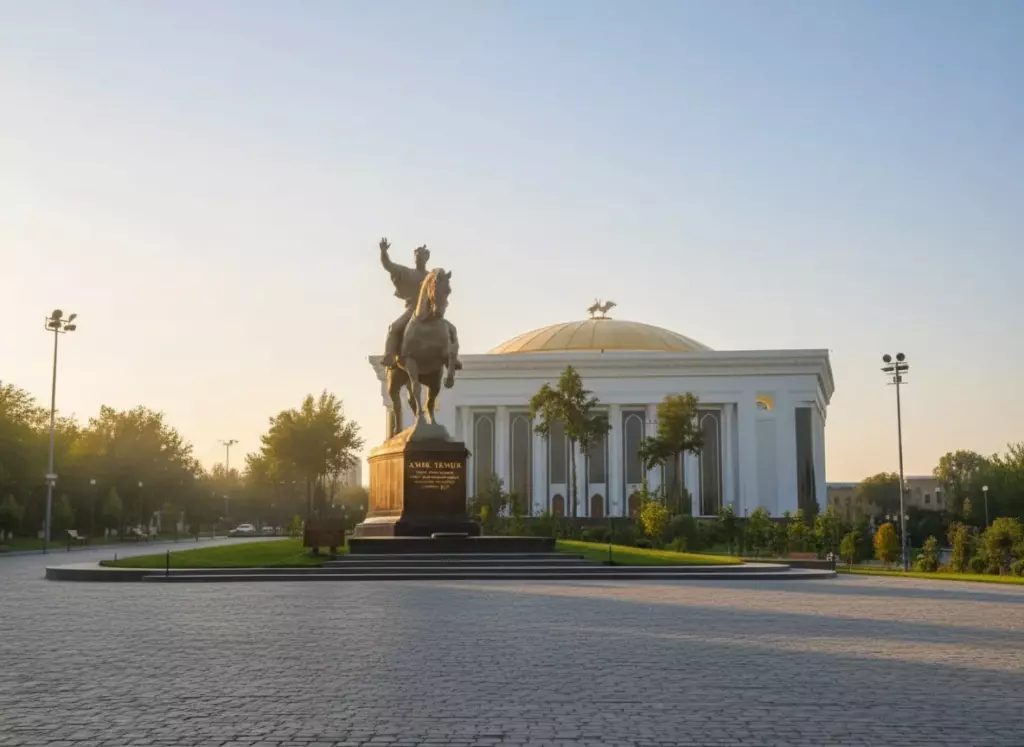
  • Amir Temur Square

    Tashkent

    Uzbekistan's modern capital, with a contrast between old and new.

  • Amirsoy

    Amirsoy resort

    A ride in closed cable-car cabins up to about 2,290 m with panoramic views of the mountain ridges.

  • Urungach Jade Lakes

    Urungach Jade Lakes

    Mountain lakes of an unusual color in Ugam-Chatkal National Park.

  • Hike to Paltau Waterfall

    Paltau waterfall

    A 38-meter waterfall in Ugam-Chatkal park — a walk along a mountain trail.

  • Registan Square in Samarkand

    Registan (Samarkand)

    The main architectural ensemble of Samarkand and one of the symbols of Uzbekistan.

  • Aydarkul

    Yurt camp by Aydarkul

    Overnight in traditional yurts with a desert atmosphere in the evening and dinner by the fire.

  • Bukhara

    Bukhara

    An ancient Silk Road city with madrasas, mosques and cozy squares of the old center.

  • Ancient Merv

    Ancient Merv

    UNESCO World Heritage Site: a Silk Road city that has existed for more than 2,000 years.

  • Ashgabat, Turkmenistan

    Ashgabat

    A capital city listed in the Guinness Book of World Records for the number of white marble buildings.

  • The Darvaza gas crater

    The Darvaza gas crater

    A burning crater about 60 meters in diameter in the Karakum Desert and a night in the desert near it.

  • Kunya-Urgench, Turkmenistan

    Kunya-Urgench

    Mausoleums and minarets from the 11th–14th centuries in the former capital on the Silk Road.

  • Khiva: getting to know the museum city

    Itchan Kala (Khiva)

    A medieval walled city with minarets, palaces and madrasas, listed as a UNESCO World Heritage Site.

  • Uzbek plov, samsa, flatbreads, sauce, kazan kebab

    Plov and Uzbek cuisine

    Plov from a kazan, flatbread and samsa from a tandoor, shashlik and green tea in a teahouse — you will taste the country's signature dishes right along the route. The culture of plov is on UNESCO's list of the intangible cultural heritage of humanity.

Tour conditions

Starting point
Tashkent or Urgench
Duration
13 days / 12 nights
Price
Upon request

Included

  • A choice of 3-star or 4-star hotels in Uzbekistan, a yurt camp, and a night in the desert near Darvaza;
  • Transport services;
  • Meals included with lodging, meals in the desert;
  • Services of a Russian-speaking tour guide in Uzbekistan and a Turkmen-speaking tour guide in Turkmenistan;
  • Invitation for a visa to Uzbekistan;
  • Processing a tourist visa for Turkmenistan, including document preparation and visa assistance at every stage;
  • Admission Tickets in Turkmenistan.

Not included

  • Admission tickets in Uzbekistan (in Turkmenistan, they are already included in the price);
  • Visa (cost depends on citizenship);
  • Migration fee at the Turkmenistan border;
  • Tourist tax;
  • Airfare;
  • Insurance;
  • Single-occupancy surcharge.

Additional information

  • 50% prepayment;
  • The minimum number of participants is 2;
  • The mountain and city segments in Uzbekistan can be adjusted or swapped in consultation with the group; the itinerary through Turkmenistan is set in advance, and participants are not permitted to deviate from it on their own.

Good to know

8 answers to frequently asked questions

Do I need a visa to travel to Uzbekistan?

Citizens of most CIS and European countries don’t need a visa.

CIS and former USSR countries. Citizens of Russia, Belarus, Kazakhstan, Armenia, Azerbaijan, Moldova, Ukraine, and Georgia enter without a visa under bilateral agreements, with no fixed length of stay: for a long trip, temporary registration is required. Citizens of Kyrgyzstan can stay without a visa for up to 60 days, and those of Tajikistan and Turkmenistan for up to 30 days. Russians need an international passport: an internal passport will not be accepted.

Europe and the USA. Citizens of EU countries, the United Kingdom, Switzerland and Norway can enter visa-free for up to 30 days, and US citizens also for up to 30 days (from 2026). Your passport must be valid for at least 3 months after entry.

Other countries. If a visa is required, it is applied for online on the e-visa.gov.uz portal; an e-visa is issued in about 3 business days. We will tell you how to get one.

Registration. Foreigners are registered at their place of residence within 3 days of arrival, and citizens of Russia within 14 days. In a hotel, the hotel does this; the tourist tax is usually already included in the bill. Keep the registration slip until departure.

Can I travel to Turkmenistan independently?

Independent travel in Turkmenistan is practically impossible. Entry is only allowed with a visa based on an official invitation and an approved itinerary, so travel is only possible as part of an organized tour.

Is it difficult to get a visa for Turkmenistan?

For tourists the visa is issued with the support of the host party. We prepare the invitation and coordinate the process, so getting the visa is not difficult for the traveler.

Can the route be changed during the tour?

In Uzbekistan, the urban and mountain segments of the itinerary can be adjusted or swapped in consultation with the group. The itinerary is approved in advance and must be followed. Minor adjustments are possible by mutual agreement; however, independent deviations from the itinerary are not permitted due to visa and administrative regulations.

Can I take photos in Turkmenistan?

Photographing tourist sites and natural locations is allowed. There are, however, restrictions on filming government buildings, military facilities and law enforcement officers. Your guide will warn you about such places in advance.

What level of fitness is required?

Most of the program consists of guided tours. The hiking trails to the Jade Lakes and Paltau Waterfall are suitable for people with a basic level of physical fitness and do not require any special experience. In Turkmenistan, travel involves crossing the desert and remote regions; no special preparation is required.

What kind of accommodation is included?

In cities, accommodations are in comfortable 3- or 4-star hotels of your choice. In the desert, you’ll spend the night in a fully equipped yurt camp with furniture and lighting. In Turkmenistan, you’ll stay in hotels and spend one night in the desert near the Darvaza Crater.

When is the best time for this tour?

The best time to travel is spring and autumn, when the weather is most comfortable for excursions and mountain hikes. Higher temperatures are possible in summer, especially in desert areas.

Didn’t find an answer?

Ask a question

Reviews

5.048 reviews

  • Ilnur Khayrullin

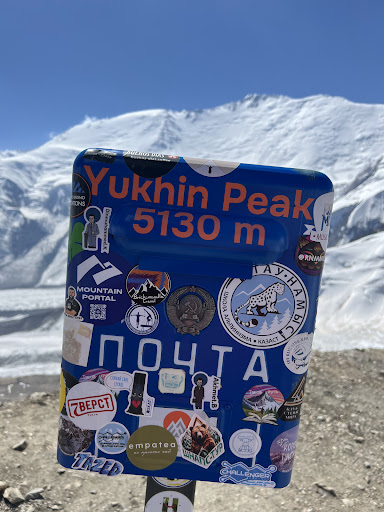
    My wife and I, along with Evgeny, completed the hike to Yukhin Peak.

    Let me say up front: the whole time it felt as if we had asked a friend who knows tourism and the mountains inside out to organize this trip for us.

    Before the hike, I had a rather superficial idea of what awaited us. But in the end, everything turned out to be much easier, tastier, and more comfortable than I expected. Despite acclimatization and the physical exertion, we confidently completed all the stages of the planned itinerary and reached Yukhin Peak.

    There were times when we felt tired. But the fatigue quickly evaporated as more and more mesmerizing panoramas of the Pamirs opened up before our eyes.

    Zhenya was there throughout the entire route, offering advice on how to best adapt to the altitude and load, and helping with organizational matters.

    Great views, a great guide — our adventure had it all 😁
  • Ilona Toots

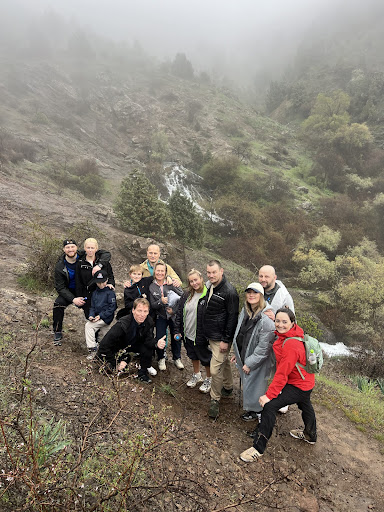
    Our family and our friends (including 2 kids) enjoyed a a day tour to Sukok. Unfortunately the weather was not co-operating, it kept raining the whole day and due to this the whole rode in the mountains was muddy and slippery. But Evgeni´s excellent guidance, positivity and knowledge of the scenery made the day a most memorable for everybody despite some rides on the bottom :DWe ate the local "Green Somsas" on the way, drank water from the mountain well, crawled through the cave and inhaled the amazingly fresh air.On another day we also had lunch at a huge pilaff restaurant and after that a fascinating tour in the city. Evgenii is very competent and tells interesting stories. Everything ran smoothly and in a very friendly atmosphere, the tour bus was excellent and the driver super helpful. So we can only support your choise of Xtrail Tour!

  • Anastasia

    On behalf of our whole cheerful group, I want to express sincere gratitude to the entire X-Trailtour team, and especially to Evgeny Shabanov, for the unforgettable excursions to the Jade Lakes and Aksagata Canyon! Your professionalism, positivity and attention to detail made our trip unforgettable. The stunning, breathtaking views of these places will stay in our memory forever. Thank you for your work and for caring about every participant of the tour.
    We wish you continued success and prosperity. We are planning a tour next year with X-Trailtour.

  • Elena Sitnikova and Tatiana Leikina

    Thank you to Evgeny Shabanov for two tours, of Tashkent and its surroundings. Yesterday we headed out of the city — we visited the Amirsoy mountain resort, saw the Charvak Reservoir, the village of Khodjikent with its 850-year-old plane trees, ancient petroglyphs, and the Institute of Solar Physics. Our emotions were off the charts — the cable car, the vast expanse of water, seeing walnuts growing on trees for the first time, and even picking some to take home! We felt like stalkers exploring the Institute of Solar Physics. Today’s city tour turned our walk into a fairy tale! We walked all day long, saw all the main sights, monuments, and squares, tried national dishes at a café, and even managed to buy tickets to a local theater! It was fascinating to learn about the country’s history, customs, and traditions, how people live today, and how the monuments on one and the same pedestal kept changing, and we saw lots of mosaics on buildings. We visited Chorsu Bazaar, saw new products being made there today, and learned how they came about. We explored a mahalla and were even invited into a courtyard. The day flew by, and we’ll definitely come back to Uzbekistan to travel with Evgeny and his team to other cities and neighboring countries.

  • Nikolay

    The trip to the waterfall turned out to be a great choice for spending time well and enjoying the beauty of the mountains. Thank you to our guide Evgeny for a wonderful tour

  • Alex

    We've used XtrailTour several times to organize private hikes in the stunning mountains of Uzbekistan. We were very pleased with everything. The tour organization was excellent. Several of our requests regarding one of our trips were taken into account. They paid close attention to detail and, as I mentioned earlier, to our wishes. Comfortable transportation was provided, and a qualified guide was assigned to us. We had unforgettable experiences on these trips. We plan to visit the mountains of Kyrgyzstan. I hope everything works out for us with XtrailTour's help.

  • Dmitry

    We spent two days on tours with our guide Evgeny — and it was wonderful!

    The first day — Tashkent.
    The city made an incredible impression: modern, spacious, green and very atmospheric. The tour was perfectly balanced — Evgeny did not overload us with unnecessary information but managed to convey the essentials: the spirit of the city, its history, character and mood. We saw all the main sights, learned many interesting facts, had a delicious meal at the Plov Center and got useful tips on where else to go. Evgeny even suggested routes and ideas for our next days in Samarkand — special thanks for that!

    The second day — the Chimgan mountains.
    It had a completely different mood, and that was wonderful. The trip into nature gave us new emotions: mountains, fresh air, stunning scenery. We took the cable car up to the Amirsoy ski resort, enjoyed amazing views, and then went paragliding over the Charvak reservoir — an unforgettable feeling of freedom and beauty. On the way back, on Evgeny's recommendation, we stopped at a cozy café and tried incredibly delicious Uzbek dishes.

    In short:
    Huge thanks to Evgeny for his professionalism, attention, friendliness and two wonderful days in the city and in the mountains. The tours left only the warmest and brightest impressions. We definitely recommend him.

  • Ninette Castellón

    I'm from El Salvador and was discovering Uzbekistan for a couple of weeks.
    With Xtrail I could go to the mountains and have a wonderful two-days trip, where everything was well organized, safe and enjoyable.

    Dmitry, the guide, is a good person, he even spoke in Spanish with me. He was explaining many history and local insights, which I value the most.
    F. The driver, was also very nice, we was always caring about me, and trying to communicate and make me feel comfortable.

    I really appreciated their warm hospitality.

Leave a review

How was your trip? Tap a star
Photos — up to 5, max 10 MB each
Your review will appear on the site after moderation

Why travel with us

  • Individual tours tailored to you

    We build each itinerary to match your interests and pace.

  • Comfort at every step

    We take care of accommodation, transport and full support.

  • Well-planned travel logistics

    We arrange flights, transfers and accommodation in advance.

  • Memories that stay with you

    We create journeys that leave everyone with vivid impressions

  • Experienced guides by your side

    We always run our routes safely, professionally and with passion.

  • The best places in Central Asia

    We open up locations that regular tour groups never reach.

  • 24/7 support on the route

    Always in touch, solving any issue quickly and clearly.

  • Active adventures for everyone

    Hikes, climbs and day treks for every level.

Private tour

We will build a tour for your dates — free and within 1 day

Sightseeing tours and hikes, beach holidays and last-minute deals — we will find a trip for your dates and budget, from 1 day to 3 weeks.

  1. Request in 1 minute
  2. We discuss the details
  3. Get 2–3 options within a day
  • 9 years on the trails
  • Licensed guides

Evgeny Shabanov Founder of XtrailTour, mountain guide

We reply within 15 minutes · 08:00–22:00

Find a tour

or message us

Or call +998 (90) 915 82 51

Our other tours

Send a request


    Book a tour


      Ask a question