A solar furnace in the mountains: the story of the Institute of Solar Physics
Thousands of mirrors on a hillside, a giant “dish” and temperatures above 3,000 degrees. How one of the world's largest solar furnaces was built near Tashkent.
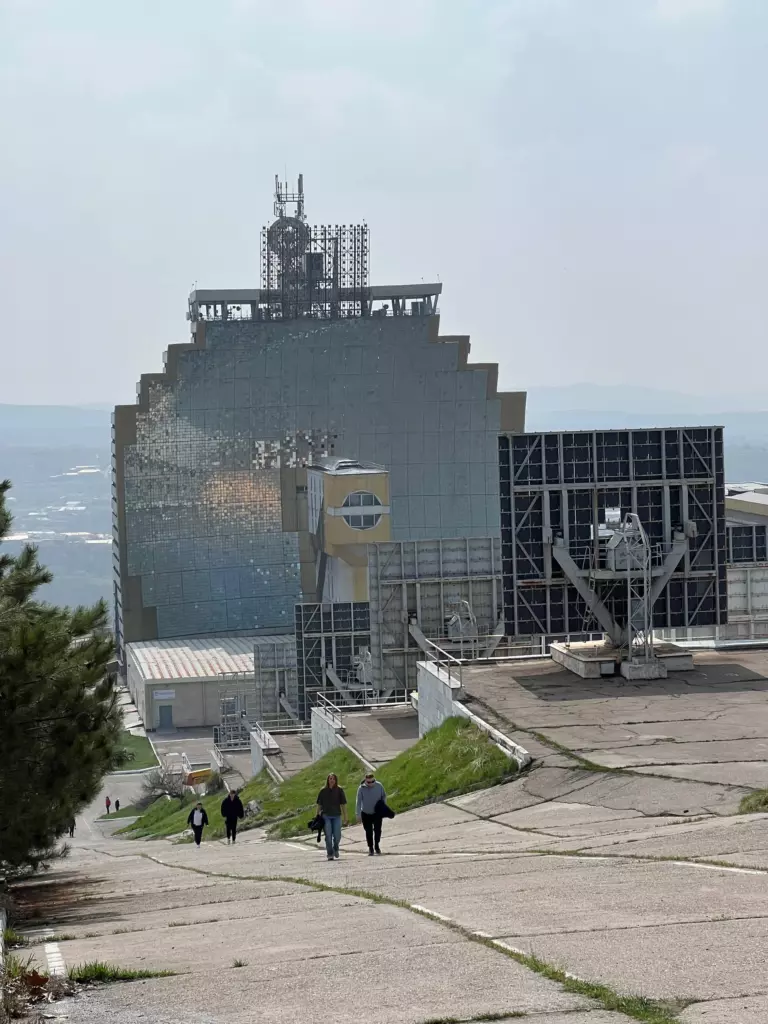
In the Tian Shan foothills, about an hour's drive from Tashkent, stands a structure that looks like a set from a sci-fi movie. On the slope are rows of huge mirrors, and facing them, a gigantic concave “dish” and a tower. This is Great Solar Furnace, often simply called the Institute of Solar Physics.
Why It Was Built
In the 1980s, scientists needed a place to reach extremely high temperatures without flame or contaminants. Solar energy was ideal: it's clean and can be concentrated on a single point. The furnace is used to melt and test materials later used in space technology and electronics.
Why Here
The site wasn't chosen at random:
- there are a great many sunny days a year;
- the facility sits on bedrock, which makes it earthquake-resistant;
- at roughly a kilometer above sea level, the air is cleaner and clearer than in the valley.
How It Works
On the slope stand 62 heliostats — large flat mirrors that turn to follow the sun. They direct the rays onto a huge concave concentrator made up of 10,700 small mirrors. The concentrator, in turn, focuses all that light onto a single point on the tower — where the temperature climbs above 3,000 degrees.
To put that in perspective: it's enough to melt steel in a few seconds.
What Visitors Will See
On the tour, you can walk up to the mirrors, see the concentrator and the furnace tower up close, and learn how it all works. If the weather cooperates, the staff will show you how a sunbeam sets wood on fire in a couple of seconds.
Tip: come on a clear day and bring sunglasses — the light from thousands of mirrors is very bright.
How to Combine It
The Institute of Solar Physics is in the Parkent District, on the way to the mountains. The trip pairs easily with a walk in the foothills or a picnic by a mountain stream.
The easiest way to do it is on our trip “Institute of Solar Physics” — with a transfer from Tashkent and a guide who explains everything you'll see.