The Maldives from Tashkent: 2026–2027 guide — when to go, which island to choose and how much it costs
How to fly from Tashkent, which month to go, how a resort differs from a local island, and where to see manta rays and whale sharks. Plus a little history and some facts about the lowest-lying country in the world.
In this article
The Maldives are more than a thousand islands in the middle of the Indian Ocean, where almost every hotel has its own island and you can swim to the reef straight from the beach. There is a direct flight from Tashkent, the visa is free, and there is no time difference. We explain when to go, how to choose an island, where to see manta rays and whale sharks, and how much such a vacation costs. The data is as of October 2026, and prices and upcoming departures are in the section on last-minute tours to the Maldives.
The Maldives in numbers
| Islands | 1,192 islands in 26 natural atolls (20 administrative atolls) |
| Who lives where | 187 inhabited islands, about 180 resort islands, the rest uninhabited |
| Land area | about 298 km², the smallest country in Asia, with islands scattered across roughly 90,000 km² of ocean |
| Altitude | average about 1.5 m above sea level, highest point about 2.4 m; it's the lowest-lying country in the world |
| Population | 515,000 people (2022 census), 41% of them in Greater Malé |
| Capital | Malé is one of the most densely populated cities in the world: over 20,000 people per km² |
| Language and religion | Dhivehi, written in Thaana script from right to left; the state religion is Islam |
| Money | Maldivian rufiyaa; resort prices are in US dollars |
| Time | same as Tashkent, no difference |
| Tourists per year | 2.25 million in 2025, a record; in 1972 there were about a thousand |

A bit of history: from Buddhist monasteries to island hotels
The Maldives was once Buddhist: on Kaashidhoo island, archaeologists excavated a monastery that was active from around 200 to 1500, and on Thoddoo a sixth-century coral Buddha head was found. The islands converted to Islam in 1153, and sultans ruled here from then on. From 1887 the country was a British protectorate; it gained independence on July 26, 1965, and became a republic in 1968.
Tourism began quite recently. In February 1972, the Italian George Corbin brought the first group to the Maldives — mostly journalists — and they stayed in houses in Malé. In October of the same year, the first resort, Kurumba, opened: there was no jetty, and guests waded ashore waist-deep in water. About a thousand tourists came during the whole of 1972, and 2.25 million in 2025. That's how the main Maldivian formula “one island, one hotel” came about. Tourists were only allowed to stay on inhabited islands among locals in 2009, and since then about nine hundred guesthouses have opened there.
How to fly from Tashkent
- Direct flight. Centrum Air has flown from Tashkent to Malé since late 2025, with a flight time of about 6.5 hours. The flight is overnight: departure is around 02:00 and arrival in Malé is in the morning, so you can catch any transfer to your island the same day. In winter there are several flights a week; for the current schedule, see the page with last-minute tours to the Maldives.
- With a layover. Via Dubai, Sharjah, Doha or Abu Dhabi, from 12 hours en route. From September 21, 2026, Uzbekistan Airways sells Malé with a connection in Dubai on its website.
- Airport. Planes land at Velana Airport on its own island, Hulhulé. The new international terminal opened in July 2025. The departure fee — $100 in economy class — is already included in the ticket.
When to go: weather by month
The Maldives is hot all year round: +30…+32 °C during the day, around +26 °C at night, and the water is 28–30 °C. The months differ in rain and wind. According to the Maldives Meteorological Service, the dry northeast monsoon blows from January to March, the wet southwest monsoon from mid-May to November, and December and April are transition months. The south of the country gets more rain than the north.
| Month | Daytime, °C | Rainfall per month, mm | Rainy days | Water, °C | Good to know |
|---|---|---|---|---|---|
| January | 30,6 | 87 | 5–6 | 28 | Dry season, high prices, New Year |
| February | 31,0 | 38 | 3 | 28–29 | Driest month |
| March | 31,6 | 49 | 4–5 | 29 | Dry and sunny, best underwater visibility |
| April | 31,9 | 127 | 8–9 | 30 | Hottest month, end of the dry season |
| May | 31,5 | 238 | 15 | 29–30 | Rains begin, prices drop |
| June – August | 31 | 150–200 | 13 | 29 | Short showers, surfing, mantas in Hanifaru |
| September — October | 30,5 | 215–245 | 15 | 29 | Lowest prices, mantas, bioluminescence |
| November | 30,4 | 236 | 14 | 28–29 | Rainy but warm, prices still low |
| December | 30,4 | 212 | 12 | 28 | Transition to the dry season; from December 20, the most expensive dates |
Air temperatures and rainfall are averages for Malé for 1991–2020; water temperatures are approximate. In the rainy season, showers are usually short and followed by sunshine, and tours are noticeably cheaper.
When it's cheapest: May to October, especially in September and October. When it's most expensive: from December 20 to early January. For a first trip, February–March is best: it's dry, the sea is calm, and the water is clear.
Resort or local island
The Maldives offers two very different kinds of holiday.
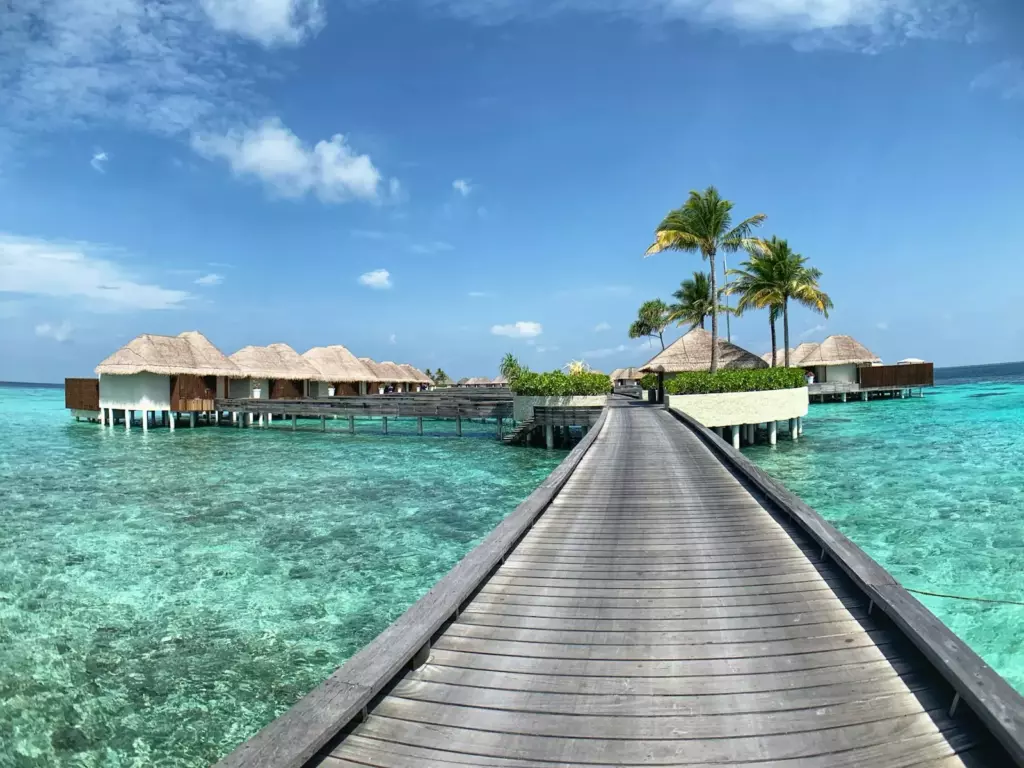
- A resort is a separate island with a single hotel on it. The beach and reef are for guests only, and there are restaurants, bars, spas, and overwater villas. You can swim in whatever you like, and alcohol is sold. It's expensive, but this is exactly why people go to the Maldives for their honeymoon.
- A local island is an inhabited island with a village, a mosque, and guesthouses of 10–50 rooms. A night costs about $50–150, lunch in a café is $4–7, and excursions go with island guides. But this is a Muslim country: there is no alcohol, swimsuits are allowed only on a separate bikini beach, and in the village you need to cover your shoulders and knees. On Fridays many ferries do not run.
The most popular local islands are Maafushi (an hour and a half by ferry from Malé, with lots of guesthouses and excursions), Ukulhas (a house reef right off the beach), Dhigurah (near the whale shark zone), Thoddoo (an island of farmers and quiet beaches), Thulusdhoo (surfing) and Fulidhoo (a small island where rays are often seen at the pier).

For a detailed comparison and hotel prices, see the section on last-minute tours to the Maldives.
Which atoll to choose
The atoll determines how you get there from the airport and what you'll see underwater.
| Atoll | Getting there from Malé | Why go |
|---|---|---|
| North and South Malé | speedboat, 15–90 minutes, around the clock | Closest to the airport, no seaplane needed; Maafushi and Gulhi are here too. Great for a short trip and a first visit |
| Ari (North and South) | seaplane or speedboat, 1–2 hours | Best diving and snorkeling: whale sharks year-round, mantas, reef sharks |
| Baa | seaplane or domestic flight + speedboat | UNESCO Biosphere Reserve since 2011, Hanifaru Bay — up to a hundred mantas at once |
| Raa and Lhaviyani | seaplane or domestic flight | Quiet new resorts, bioluminescence on Vaadhoo |
| Addu and Fuvahmulah (south) | domestic flight, just over an hour | Across the equator, fewer tourists; divers swim with tiger sharks off Fuvahmulah |
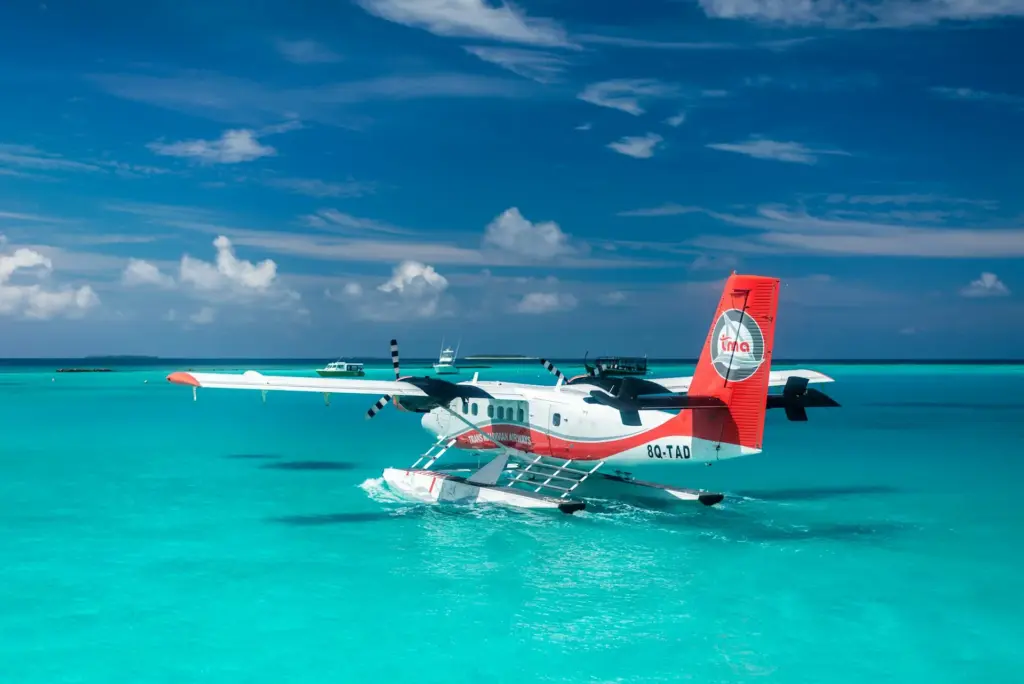
Seaplanes fly only in daylight, usually until 15:30–16:00, and cost about $300–700 per person round trip. The flight from Tashkent lands in the morning, so you can catch a seaplane the same day.
What to see and do
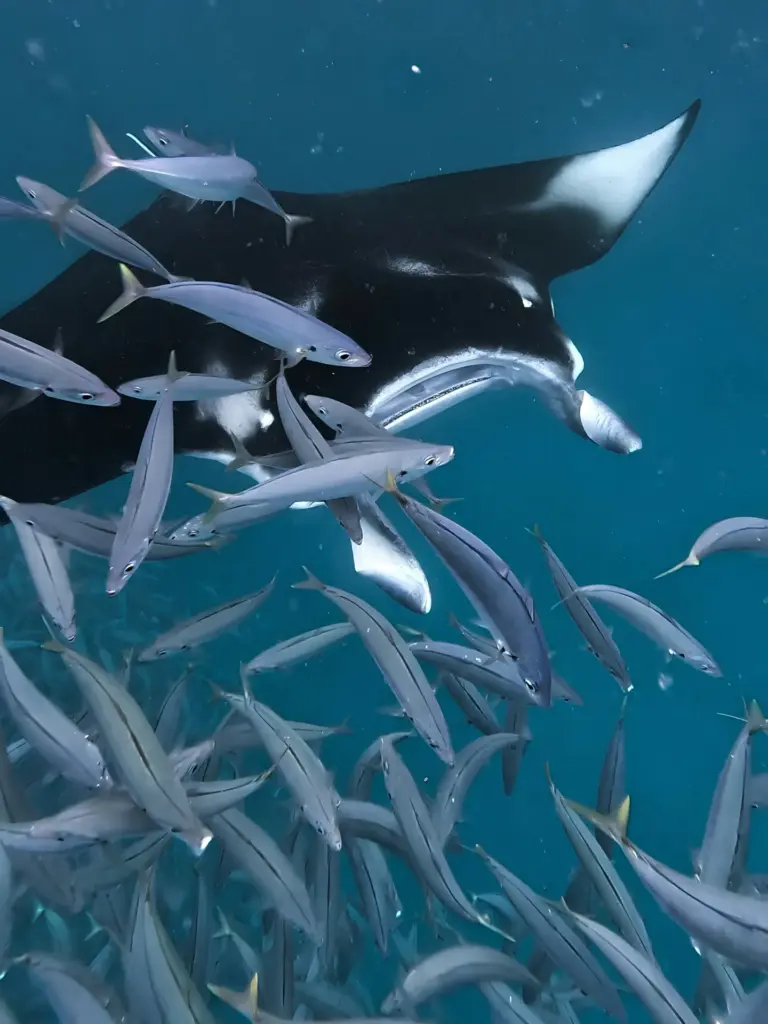
- Manta rays in Hanifaru Bay (Baa Atoll). The Maldives is home to the largest known population of reef manta rays in the world — Manta Trust has identified more than 5,800 individuals from photos. They gather in Hanifaru from June to November, sometimes up to a hundred at a time. Scuba diving is prohibited here; only snorkeling with a licensed guide is allowed.
- Whale sharks at South Ari. In the protected zone from Maamigili to Dhigurah, young whale sharks stay year-round — a consistency that is rare for these fish.

- Turtles. Five of the seven species of sea turtles are found in the Maldives, most often the green turtle and the hawksbill. You can see them even on the house reef.
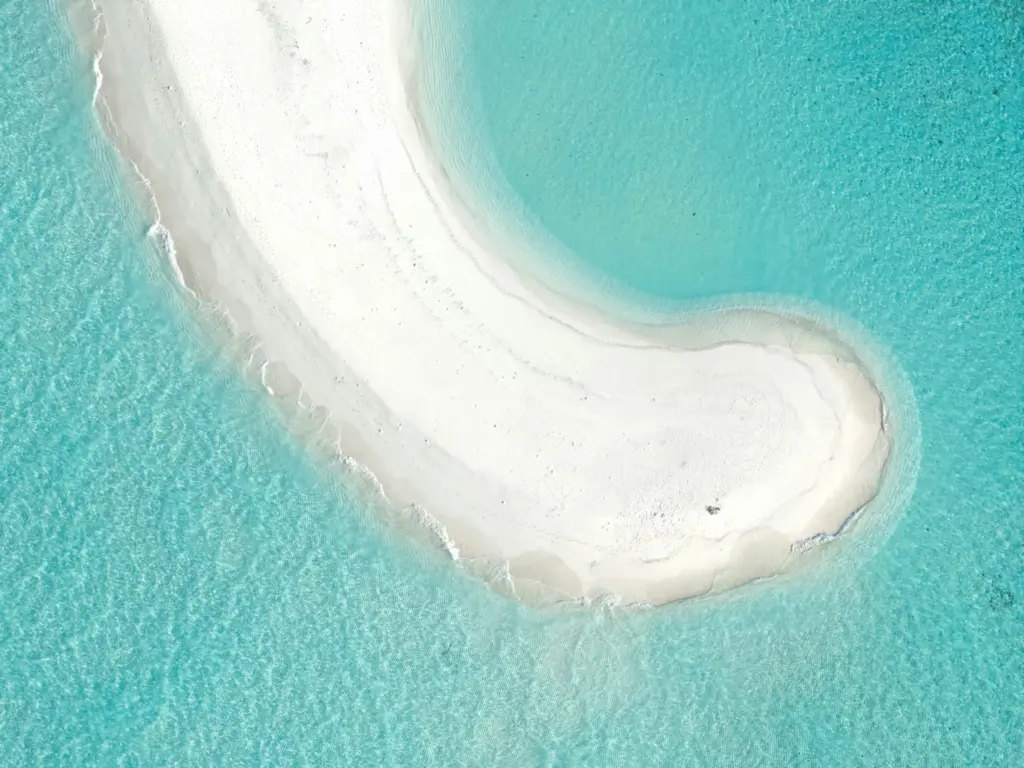
- Sandbank. A picnic on a spit of white sand in the middle of the ocean, which the water almost covers at high tide.
- Bioluminescent plankton. A blue glow along the shore on moonless nights, most often from June to October, for example on Vaadhoo Island. There are no guarantees, but if you are lucky, you will remember it for a long time.
- Surfing. From March to October, with the biggest waves in June–August; the surfers' base is Thulusdhoo and the resorts of North Malé.
- Underwater restaurant. Ithaa at the Conrad Rangali resort opened in 2005 at a depth of about 5 meters and is considered the world's first underwater restaurant.
- Malé in half a day. The Hukuru Miskiy Friday Mosque, built in 1658, is made of coral blocks laid without mortar — the Maldives' coral mosques were nominated for the UNESCO World Heritage List in 2026. Nearby are the fish market, where tuna is brought in during the day, and the city beach on the artificial island of Hulhumalé.
What to try
The main dish of a Maldivian breakfast is mas huni: tuna with grated coconut, onion and chili, eaten with thin roshi flatbread. The national soup is garudhiya, a clear fish broth with rice, lime and chili. Tea is served with hedhikaa, hot snacks such as gulha fish balls. Tuna is still caught the old-fashioned way here, one fish at a time on a pole and line: in 2012 the Maldivian fishery became the first in the Indian Ocean to receive MSC eco-certification. The easiest places to try the local cuisine are the local islands and Malé; at resorts it is served at themed dinners.
In the evening on the islands you can hear boduberu, or "big drums": about twenty musicians, the rhythm gradually speeds up, and by the end everyone is dancing.
Visa, documents and rules
- Uzbek citizens don't need a visa in advance: a free 30-day tourist visa is issued at the airport. You'll need a passport (officially valid for at least one more month, but airlines may require 6 months), a return ticket, a paid hotel booking and enough money for the trip.
- No earlier than 96 hours before arrival, a free Traveller Declaration must be filled out for each traveler, including children, on the official IMUGA portal. There are paid fake websites — only use imuga.immigration.gov.mv, and we'll help you with it.
- You can't bring in alcohol, even from duty-free — it will be confiscated at the airport. Pork without a permit and religious items of other faiths are also prohibited.
- Vapes are banned for everyone, and since November 1, 2025, tobacco can't be sold to anyone born on or after January 1, 2007 — this applies to tourists too.
- You can't fly a drone without permission from the military and aviation authorities, even a small one.
All visa rules for citizens of Uzbekistan are in the article "Visas for Citizens of Uzbekistan in 2026".
How much a Maldives holiday costs
- A 7-night tour from Tashkent with flights, transfer and hotel, per person based on double occupancy: a guesthouse on a local island or a simple resort is about $800–1,300, a 4–5★ resort is $1,500–3,500, and an overwater villa with all-inclusive costs more. Our last-minute tours to the Maldives start from $1,290 per person with flights.
- The Green Tax is paid on site: $12 per person per night at a resort, $6 in a guesthouse on a local island; children under 2 don't pay. For a week at a resort, that's $84 per person.
- At the resort, a 10% service charge and a 17% tourist tax are added to the prices at restaurants, bars, and for excursions — about 28% on top. That's why it's more cost-effective to book half board or all-inclusive right away.
- Transfer to remote atolls by seaplane costs about $300–700 round trip; by speedboat to nearby resorts it is cheaper. It is usually already included in the tour, but it's worth checking.
- On a local island, about $30–60 per person per day is enough, not counting the hotel: meals at cafes, a trip to a sandbank or to see turtles — $25–50.
- Money: bring dollars; resorts accept Visa and Mastercard, and rufiyaa are mostly needed on the local islands. Tipping is optional, as a 10% service charge is already included in the bill. Outlets are most often British type G, so bring an adapter.
A few surprising facts
- In 2009, the Maldivian government held a cabinet meeting underwater: the president and ministers in scuba gear signed a call to cut CO₂ emissions a few meters below the surface, to show that the country is threatened by rising seas.
- About 80% of the Maldives' land lies less than a meter above sea level, so the country is reclaiming new, higher islands: Hulhumalé near the airport has been built up since 1997, and its first phase alone is designed for about 60,000 residents.
- The word "atoll" entered European languages from Dhivehi, from atholhu.
- The Maldives has the world's largest seaplane fleet: Trans Maldivian Airways alone has more than 60 aircraft.
- The weekend here is Friday and Saturday, and importing dogs is banned by law, so you'll hardly see any on the islands. Cats, on the other hand, are everywhere.